
Bounced cheque new law in the UAE: here's what you need to know
In the UAE, there was a time when a bounced cheque was a criminal offence and could land the offender in jail. The previous legislation remained in effect for nearly 30 years. Since 2 January 2022, most cases have been decriminalised, though some exceptions still apply. However, bouncing a cheque can still lead to financial penalties and civil lawsuits. Here is everything to know about the law regarding bounced cheques in the UAE.
Key takeaways
- Most bounced cheque cases in the UAE were decriminalised from 2 January 2022.
- A cheque beneficiary can seek an executory order for the unpaid amount.
- Bounced cheques can still create civil claims and financial penalties.
- Insufficient funds, technical errors, closed accounts, and stop-payment requests can cause cheques to bounce.
- Rental agreements should specify cheque amounts, payment dates, and agreed payment terms.
Bounced cheques in the UAE before the amendment
A bounced cheque used to be a criminal offence under UAE law. Under the old Article (401) of the UAE Penal Code, a person could be punished with jail time or fines if a cheque bounced for any reason.
Here's a familiar scenario in Dubai's leasing landscape while it was still in effect:
If a tenant's cheque is dishonoured, a landlord could file a criminal complaint at a local police station. The police may then summon the tenant, the drawer of the bounced cheque, where they can settle the amount. Otherwise, the matter could be taken to court.
If the settlement does not happen, the police may register a case against the tenant and endorse the case to the public prosecutor or criminal court. This is where criminal liability is determined, and a fine or detention is imposed.
Bounced cheques after the UAE law amendment
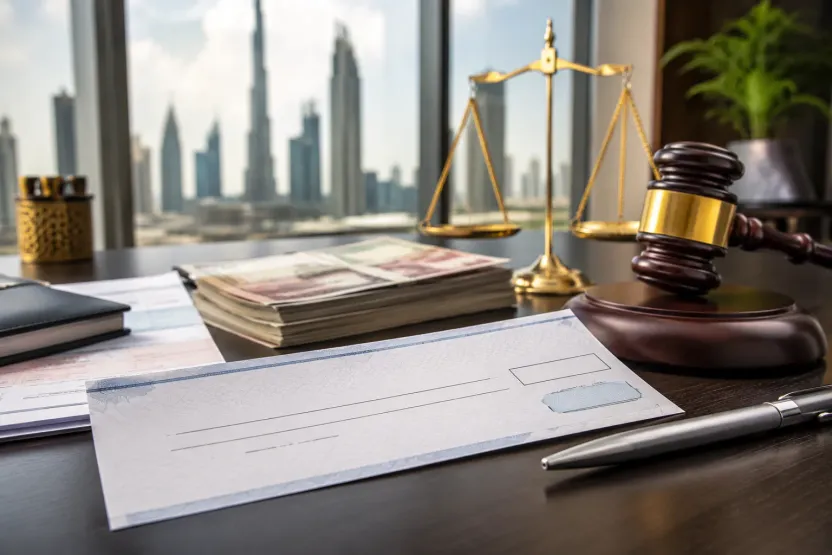
The amendments to the rules in early 2022 now classify issuing a cheque without sufficient funds primarily as a matter of civil enforcement rather than a criminal offence. Federal Decree-Law No. 50 of 2022, the Commercial Transactions Law, is the current legislation governing cheques, while the 2020 amendments introduced the key decriminalisation changes that took effect on 2 January 2022.
These changes encourage settlements, clarify what constitutes a crime in business, and reduce court cases. The previous, direct police reporting process for insufficient funds has been replaced. Now, a bearer can present a returned cheque to the bank, which must pay out available funds, or use the cheque as an executive document and apply for direct execution of the unpaid amount. Partial payment must be made where funds are available, unless the bearer refuses it.
Police/prosecution fines for non-fraudulent bounced cheques (NSF) are eliminated. Certain conduct can still constitute a criminal offence. In specified cases, the law provides for a fine of at least 10% of the cheque value, subject to a minimum of AED 5,000 and a maximum of twice the cheque value. More serious conduct, such as deliberately preventing payment, can also carry imprisonment of six months to two years together with the applicable fine.
Common reasons for cheques bouncing in the UAE
Here are some common reasons for a bounced cheque:
- Not enough money in the bank account when the cheque is presented for payment.
- Technical mistakes like signatures not matching, missing or incorrect dates, or unclear writing.
- Closing the bank account before the cheque is cashed.
- Asking the bank not to pay for the cheque.
What are the best practices to prevent bounced cheques?
Post-dated cheques can be used for scheduled payments, but the issuer needs to ensure sufficient funds are available when each cheque becomes payable. Instead, other payment methods should be used where the parties prefer to avoid future-dated cheque payments. Modern electronic payment methods such as bank transfers, online payments, and mobile transfer applications serve as convenient alternatives.
When a cheque is handed over, the recipient can check the likelihood of it clearing using the official Al Etihad Credit Bureau (AECB) Cheque Clearance Indicator mobile application or web portal. By scanning or entering the cheque data manually, the Cheque Clearance Indicator provides the probability that the cheque will clear, based on the issuer's cheque payment track record and credit history. The indicator does not disclose confidential information, and AECB states that consent is not required to obtain it.
Steps to take if a cheque bounces

If a bounced cheque is eventually received, a few steps must be taken to avoid risking the money. They are:
Contact the bank
Immediately contact the bank and report the bounced cheque. Provide the cheque number, date, amount, and the name of the person or company that issued the cheque. The bank can provide the relevant information about the cheque's non-payment and issue the required confirmation or certificate stating the reason for non-payment.
Request a written bank statement
Request a written statement from the bank confirming that the cheque has bounced due to insufficient funds or other reasons. This statement will serve as evidence in case legal action is required.
Send a demand letter
Send a demand letter to the person or company that issued the bounced cheque. The letter should include the following information:
- Details of the bounced cheque, like the cheque number, date, amount, and the issuer's name.
- A request to pay the outstanding amount within a specified time frame agreed by the parties. A 7 to 14-day period may be used as a practical demand period, but it is not a general statutory requirement before seeking cheque execution.
- Information about the consequences of failing to make payment, such as legal action or reporting to the relevant authorities.
File for direct execution
If the person or company does not respond to the demand letter or make payment, file a direct execution case with the Dubai Courts Execution Judge or the Rental Disputes Centre (RDC) for lease agreements. Because a cheque returned for insufficient funds can qualify as an executive document under the Commercial Transactions Law, the beneficiary can apply for execution without first obtaining a separate civil judgment on the cheque debt. Enforcement measures can then be taken under the applicable execution procedures.
Take legal action
Legal action can be taken against the person or company that issued the bounced cheque if necessary. A lawyer can be consulted to understand the legal rights and options for recovering the funds owed. A criminal complaint may be relevant where the conduct falls within one of the specific cheque-related criminal offences under UAE law, such as certain deliberate acts that prevent payment, unlawful stop-payment conduct, or forgery.
Landlords dealing with unpaid rent can also refer to What happens if my tenant doesn’t pay rent? for further information on rental payment disputes.
Property transactions can also involve substantial contractual payments. Anyone involved in purchasing property can refer to Understanding the legal steps for purchasing real estate in Dubai for further guidance.
Bounced cheques and Dubai real estate transactions
Bounced cheques can affect property transactions when they are used for purchase payments, rental payments, security deposits, or other contractual obligations. The legal consequences depend on the reason for the cheque being returned and the terms of the underlying agreement.
Buyers considering apartments for sale in Dubai should review the payment schedule before signing a sale agreement. The contract should state the amount, payment dates, and accepted payment methods. A returned cheque can lead to a claim for the unpaid amount if the payment obligation remains outstanding.
Bounced cheques in Dubai rental agreements

Cheques are still used in some Dubai rental agreements as a method of paying rent. The tenancy contract generally sets out the rent amount, payment dates, number of cheques, and other agreed payment terms.
A bounced rental cheque does not cancel the rent owed under the tenancy agreement. Landlords can take the appropriate steps to recover unpaid rent and may rely on the returned cheque and bank records as supporting documents.
Tenants looking for a studio for rent in Dubai should check the payment schedule and cheque requirements before signing a tenancy contract. Understanding the agreed payment terms can help avoid disputes over missed or returned payments.
Conclusion
Bounced cheque incidents can happen due to sudden financial difficulties, job loss, or insufficient cleared funds when the cheque is presented. While a standard bounced cheque is no longer treated as a criminal offence, it can still become a civil debt. If a beneficiary files an execution case to recover the amount, an Execution Judge may take enforcement measures available under UAE law. A travel ban, where applicable, is subject to specific legal conditions, including the statutory AED 10,000 debt threshold and circumstances giving rise to concern that the debtor may flee. A history of bounced cheques is also recorded in AECB credit reports and may affect how lenders assess future credit applications. To avoid these legal and financial consequences, sufficient funds should always be available before writing a cheque.
Thinking about buying property in Dubai? Browse properties for sale in Dubai through betterhomes, a top real estate agency in Dubai and review the payment terms carefully before committing to a purchase.
Frequently asked questions
Can a bounced cheque still result in criminal liability in the UAE?
+−
Yes. Most bounced cheque cases were decriminalised under the 2022 reforms, but certain conduct can still constitute a criminal offence. Cases involving deliberate acts such as fraud, forgery, or intentionally preventing payment can fall outside the ordinary civil treatment of a cheque returned for insufficient funds.
Does a bounced cheque automatically lead to a travel ban in the UAE?
+−
A bounced cheque does not create a travel ban in every case. Travel restrictions can arise from unresolved legal proceedings or enforcement matters. The specific circumstances, status of the case, and applicable authority determine whether such a restriction is imposed and when it can be lifted.
Can a landlord recover unpaid rent after a tenant's cheque bounces?
+−
Yes. A bounced rent cheque does not erase the underlying rental obligation. A landlord can pursue recovery through the applicable rental dispute or enforcement process, depending on the circumstances. The tenancy agreement, payment records, returned cheque, and bank documentation can become relevant evidence during the recovery process.
What documents can support a bounced cheque claim?
+−
The following documents can support a bounced cheque claim:
- Original cheque or returned cheque record
- Bank confirmation showing the reason for non-payment
- Payment records
- Underlying agreement
- Correspondence concerning the outstanding amount
- Demand letter
These documents can help establish the payment dispute during legal proceedings.
Can a cheque bounce because of a technical mistake?
+−
Yes. A cheque can be returned because of issues such as a signature mismatch, an incorrect or missing date, unclear writing, or other banking requirements. Not every returned cheque results from insufficient funds. The bank's written confirmation is important because it identifies the reason for the cheque being returned.
Where can Dubai property information be found online?
+−
Many real estate brokerages like betterhomes publish Dubai real estate blogs covering property transactions, renting, buying, legal matters, and market information. Such resources can offer practical background before a property decision. Case-specific legal disputes still require advice from a qualified legal professional familiar with the relevant UAE rules.