Free zones in Dubai: A complete guide
Setting up a company in Dubai is often one of the more straightforward parts of relocating. Free zones make business ownership relatively simple; the paperwork can move quickly, and the tax environment is attractive compared with many other countries.
The part that often comes next is finding somewhere to live. Once the trade licence is in place, there is still an address to sort out and a home to rent or buy.
This guide covers both sides of the move. It explains how Dubai free zones work, the types of businesses each one suits, and the neighbourhoods where free zone professionals commonly choose to live, rent and buy.
Key takeaways
- Dubai has 30+ free zones tailored to different industries.
- Jumeirah Lakes Towers, Business Bay, Downtown Dubai, Meydan, and Dubai Silicon Oasis offer convenient access to free zones.
- Executive Council Resolution No. 11 of 2025 allows many free zone companies to operate in mainland Dubai.
- Mainland expansion requires separate accounting to protect free zone tax benefits.
- Living near your workplace can reduce commuting time and improve convenience.
What is a Dubai free zone?
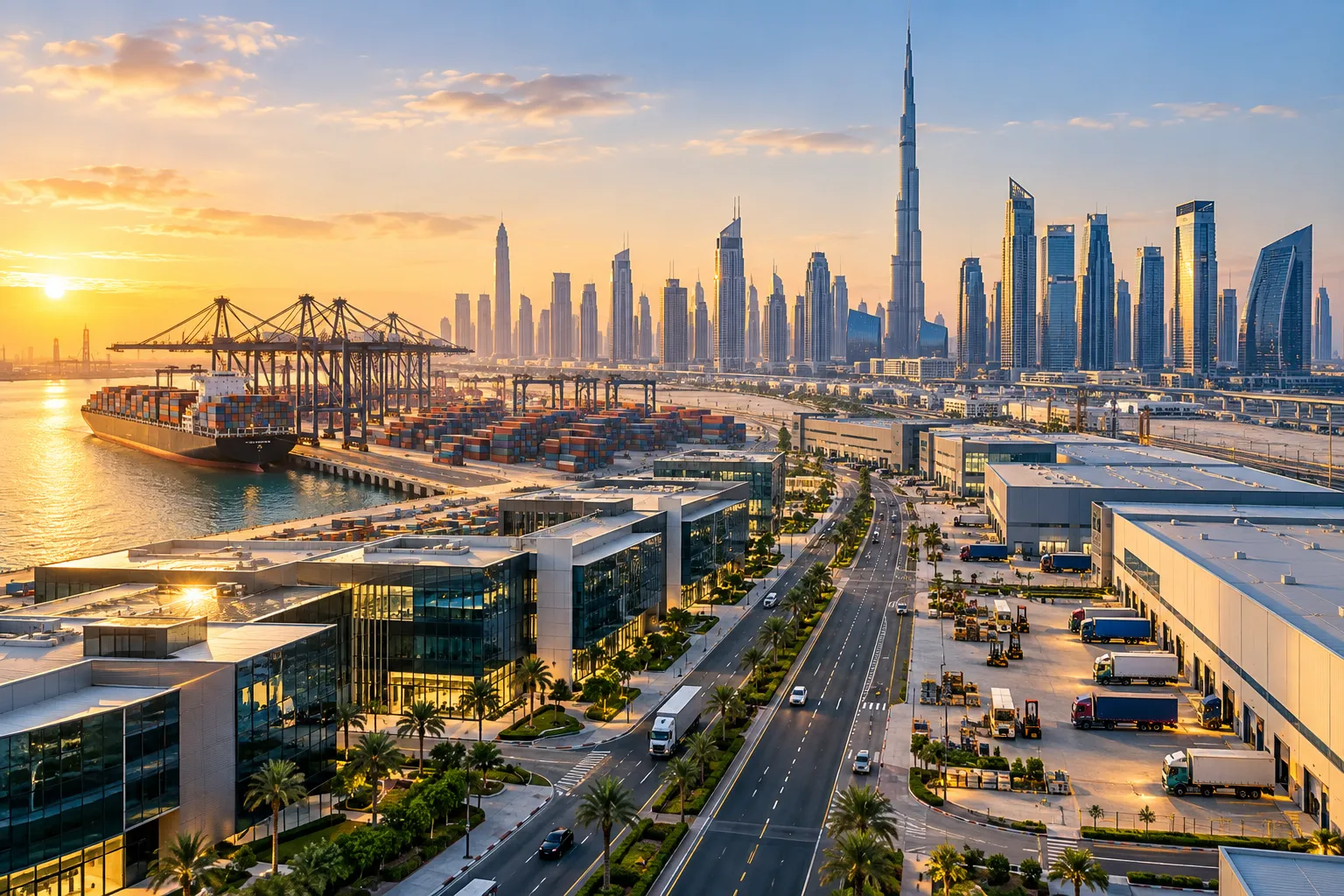
A free zone is a designated area in the UAE with its own rules for business ownership, tax, and licensing. Establish a company there, and the setup comes with 100% foreign ownership, no need for a local Emirati partner, full profit repatriation, and zero personal income tax. Dubai alone has more than 30 free zones, each built around a specific group of industries. Across all seven emirates, the UAE has 45 or more free zones.
Each zone has its own regulatory authority. For example:
- DMCC issues licenses for trading and commodities.
- DIFC runs its own common law courts for finance and legal firms.
- IFZA, based in Dubai Silicon Oasis, offers flexible licenses covering almost any professional or trading activity under one roof.
A company registered in a free zone gets its license from that zone's authority, not Dubai's general Department of Economic Development. The license only covers the business activities approved for that specific zone.
One point worth understanding early is corporate tax. Since it came into effect in June 2023:
- Free zone companies must register for corporate tax.
- Qualifying income can still benefit from a 0% rate under the Qualifying Free Zone Person (QFZP) rules.
- Filing audited financial statements is an absolute legal mandate to maintain this 0% tax status, regardless of the company's size. These audits must be signed off by a UAE-approved, Ministry of Economy-registered auditor to be accepted by the Federal Tax Authority (FTA).
A good accountant can explain these rules before a zone is chosen because the tax structure can have a much bigger impact on long-term costs than the license fee.
Free zone companies can now operate in mainland Dubai
Free zone companies faced one long-standing limitation for years. Direct trading in mainland Dubai required a separate mainland company. Executive Council Resolution No. 11 of 2025, issued on 3 March 2025, changed that. The Department of Economy and Tourism (DET) now allows free zone companies to carry out business activities across mainland Dubai through three different routes.
Every option requires:
- Approval from the original free zone authority.
- A valid free zone license.
- Any additional government approvals required for regulated activities. Note that the Dubai Department of Economy and Tourism (DET) restricts access based on a specific economic activity list. Highly regulated sectors still require separate ministry approvals.
One exception still applies. Financial institutions licensed by the Dubai International Financial Centre (DIFC) do not fall under this Resolution. They continue to operate under the DIFC's own legal framework.
The Resolution also addresses staffing. Companies licensed for mainland activity can keep their existing free zone employees, and those employees keep their free zone employment benefits. There is no requirement to register the workforce under a separate mainland company.
Existing businesses also receive a transition period. Companies already operating outside their free zone before the Resolution came into effect have one year to comply. The Director General may grant one additional one-year extension where necessary.
Essential compliance and hidden costs for founders
A founder running a DMCC or IFZA company and considering a shop, office, or showroom in Downtown Dubai, Business Bay, or another mainland location now has more options. However, expanding onshore triggers serious operational and tax obligations:
Separate Accounting Records: Companies must maintain strictly separated financial books for free zone and mainland revenue. Merging records can result in severe penalties and disqualify your 0% free zone tax status.
The Intersecting Tax Reality (The De Minimis Rule): Operating a mainland branch brings strict Federal Tax Authority rules for non-qualifying mainland income. Note that this threshold is evaluated against Gross Revenue (not net profit). That revenue is treated in one of two ways:
- If non-qualifying revenue stays below 5% of total revenue or AED 5 million, whichever is lower, the company can retain its Qualifying Free Zone Person status. This non-qualifying income is still subject to the standard 9% corporate tax rate, and the AED 375,000 0% threshold does not apply.
- If mainland revenue exceeds the 5% or AED 5 million threshold, Qualifying Free Zone Person (QFZP) status is lost for that financial year. The standard 9% corporate tax rate then applies to the company's entire taxable income, covering free zone and mainland activities. The business also cannot regain QFZP status for the following four years.
Dual Law Frameworks: Onshore branches are bound by two separate legal codes simultaneously. Your primary license answers to your free zone, but mainland operations must strictly follow mainland consumer protection, commercial laws, and DET inspections.
Mainland Property Fees: Securing a physical retail space or office onshore subjects the company to standard mainland rules, including a 5% Dubai Municipality commercial property fee levied on the annual rent value.
A branch license or a temporary permit may cover what once required an entirely separate mainland company, provided the business meticulously manages its dual bookkeeping.
List of free zones in Dubai
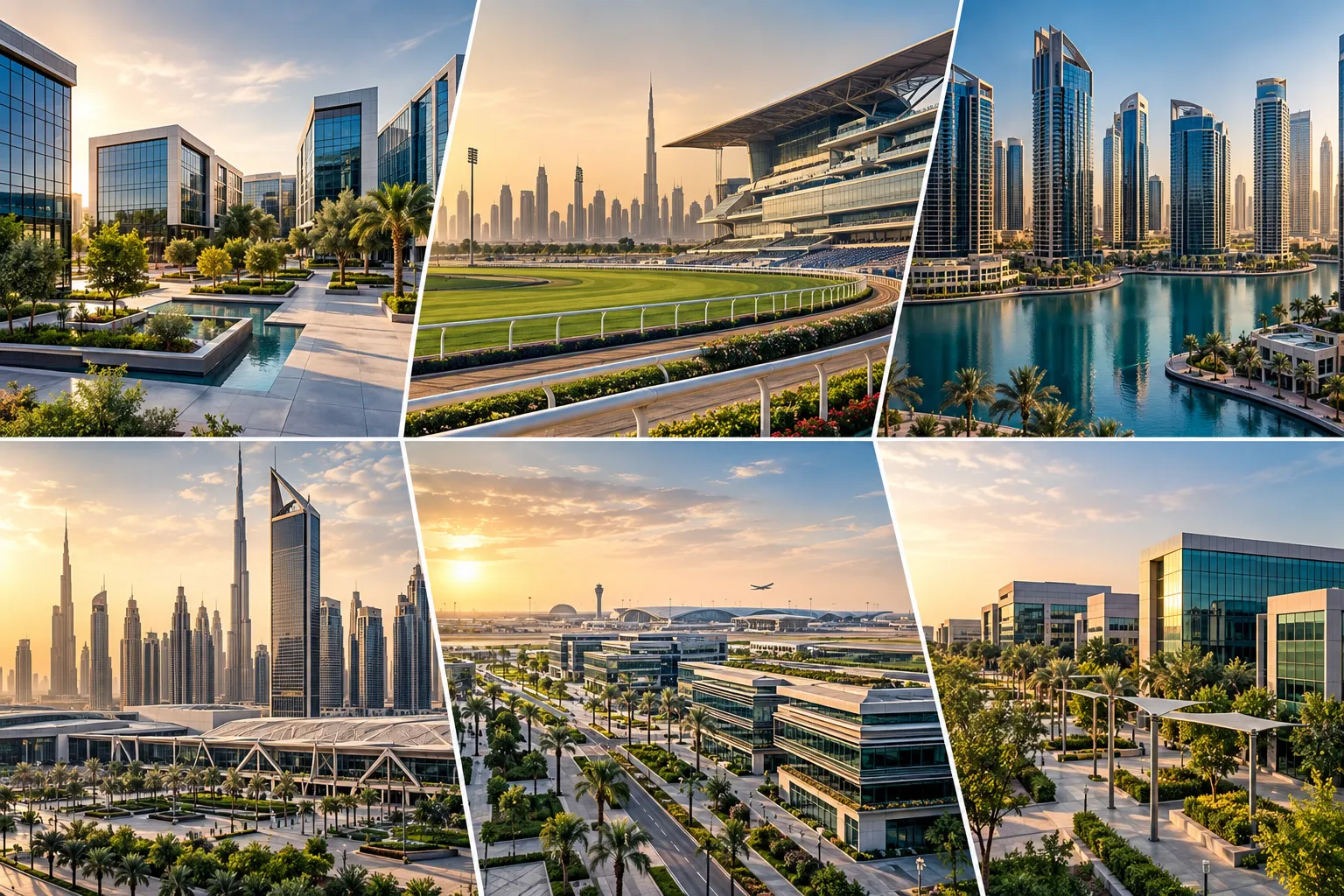
A low license fee can lead to a massive tax bill or operational bottleneck later. Each zone locks a company into a specific legal network, a unique set of trade restrictions, and strict corporate tax brackets.
To help in comparing, here is how they break down by industry.
General trading, e-commerce & cost-effective hubs
Most expat founders, consultants, and online business owners start with these general-purpose free zones. Entry costs are relatively low, licenses can cover multiple business activities, and remote desk options make it easier to launch a business without committing to the expense of a full office.
Tech, innovation & creative ecosystems (DDA & TECOM Group)
Companies in technology, engineering, media, and creative services often choose specialist free zones built around their industry. Note that the majority of these hubs are managed under the centralised TECOM Group framework.
Shipping, heavy industry, logistics & aviation
These industrial free zones are located close to Dubai's major seaports and international airports to accommodate heavy cargo movement and manufacturing.
Specialised financial, educational & healthcare hubs
Highly regulated professions require strict, sector-specific legal frameworks to operate safely. Free zones built for these sectors provide the legal and regulatory framework needed for investment firms, universities, research centres, and private healthcare providers.
Where to live near Dubai free zone?
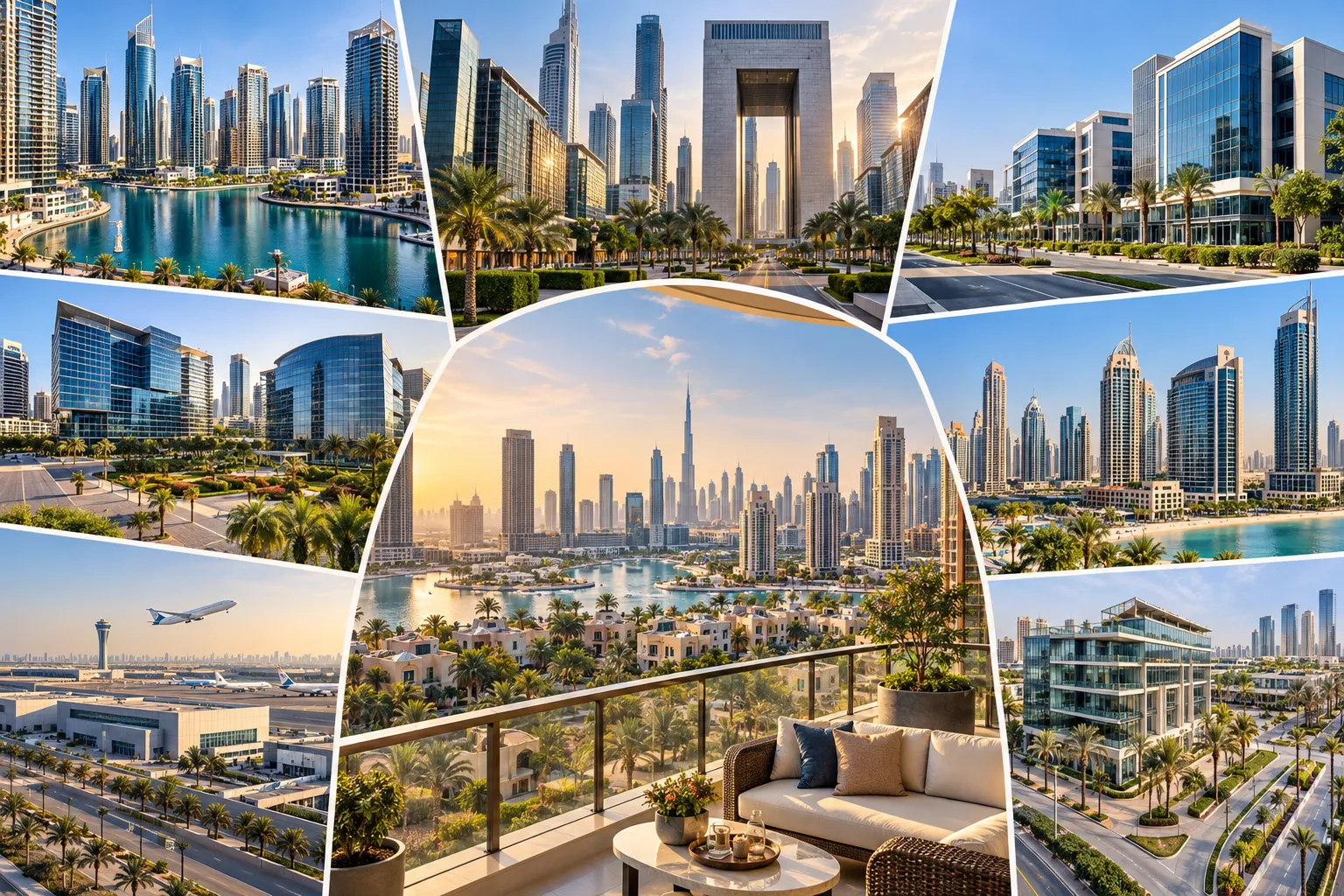
Business setup is only part of the process. Once the license, visa, and Emirates ID are in place, the next decision is where to live. Most of Dubai's major free zones sit close to established residential communities, so finding a home near the office is rarely difficult.
DMCC - Trading and global business hub
DMCC is home to more than 26,000 companies and ranks among Dubai's busiest business districts for trading, commodities, and commercial services. The free zone operates in Jumeirah Lakes Towers with direct Metro access. Because of this, JLT is the most practical residential choice for DMCC-based teams. Apartments for rent in JLT cost less (AED 55,000 for a studio) than similar homes in Dubai Marina, yet the commute takes only a few minutes. Business Bay also sits within easy reach for those who prefer a more central address.
DIFC - Financial centre with an independent legal system
DIFC serves banks, investment firms, fintech companies, and legal practices under its own English common law framework. AI and fintech firms in the centre grew by 35% during 2025. Business Bay and Downtown Dubai are closest to the financial district. One-bedroom apartments for sale in Downtown Dubai average AED 1,900,000 and appeal to buyers who prefer to live near their offices. Business Bay offers more varied price points.
IFZA - Affordable setup for small businesses
IFZA operates within the Dubai Silicon Oasis (DSO) community. The authority provides highly competitive business setup packages. Licensing costs for freelancers, consultants, and solo entrepreneurs start at approximately AED 12,900. A single commercial licence can cover up to three business activities without additional platform fees.
The surrounding freehold property market functions as an affordable residential enclave for business owners. Buyers and investors investing for high rental yields place Liwan and the Dubailand residential complex side by side with DSO apartments for sale. Both neighbouring master communities feature capital appreciation potential, high tenant demand, and lower entry prices per square foot than premium coastal hubs.
Dubai Internet City - Hub for tech startups and IT firms
Dubai Internet City is a leading destination for technology startups, software companies, and IT consultancies. The free zone is close to Al Sufouh, a 10-minute drive from Dubai Marina, and is home to several global technology companies.
Dubai Media City - Home to Dubai's creative industries
Dubai Media City (DMC) operates as a premier commercial hub tailored for digital marketing agencies, publishers, production houses, and global media enterprises. The dedicated corporate free zone borders Dubai Internet City within the broader Al Sufouh master development. Their close proximity gives both business districts access to a highly specialised professional talent pool and premium office space.
Business owners usually look for homes close to the office to cut down on daily travel time. Apartments for rent in Dubai Media City suit those who want to live within the business district. Apartments for rent in Al Sufouh offer a wider range of prices due to differences in building age and amenities.
Dubai South - Gateway for logistics and aviation
Dubai South serves as the main hub for logistics, aviation, and e-commerce companies. Al Maktoum International Airport is right at the heart of this commercial district. Founders launching businesses here require nearby housing to stay close to operations. Apartments for rent in Dubai South provide modern residential units directly beside the business parks. Property buyers also target apartments for sale in Expo City Dubai, where brand-new developments attract corporate tenants. A car is the most practical way to travel between these southern neighbourhoods.
Meydan Free Zone - Flexible Choice for startups and e-commerce
A newer option that appeals to e-commerce businesses, general trading companies, and service providers. Located near Nad Al Sheba, it allows up to three license groups, such as trading, consulting, and services, under a single license.
Strong commercial activity supports steady demand for housing. Consequently, apartments for rent in Meydan remain a primary choice for proximity to the office blocks. The area also registers consistent activity in the sales market.
The same approach works across every free zone. Pick the free zone first, then search for a studio for rent in Dubai or a flat to buy within a 10 to 20-minute radius. A shorter journey each day can easily outweigh the savings on a cheaper home farther away.
Final thoughts
Dubai gives founders one of the simplest paths to 100% company ownership, a residence visa, and zero personal income tax through its network of more than 30 free zones. Executive Council Resolution No. 11 of 2025 also opens new routes into mainland Dubai through branch licences and temporary permits. The gap between free zone and mainland operations is now much smaller for many businesses. A trade licence is only one part of the move. The right free zone, a nearby home, and a clear understanding of rental and purchase costs can make the first year in Dubai far easier. Get those decisions right, and the rest of the move becomes much easier to manage.
Explore current property listings across JVC, Business Bay, Dubai Marina, and Dubai Silicon Oasis, or visit the Dubai real estate blogs for detailed community guides, rental yield data, and market insights from a top real estate agency in Dubai.
Frequently asked questions
Can a free zone company do business in mainland Dubai?
+−
Yes. Executive Council Resolution No. 11 of 2025 allows many free zone companies to operate in mainland Dubai through branch licences, free zone branch licences, or temporary permits. Businesses must still meet regulatory requirements and obtain approvals for eligible activities where required.
Which free zone is best for startups and small businesses?
+−
The right choice depends on your business model. IFZA, Meydan Free Zone, and Dubai South are popular with startups because they offer flexible licences and competitive setup costs. Compare permitted activities, office requirements, and long-term expansion plans before selecting a free zone.
What is the cheapest free zone to set up a company in Dubai?
+−
IFZA, based in Dubai Silicon Oasis, offers one of the lowest starting packages in the city, with license costs from around AED 12,900.
Is it better to rent or buy an apartment in Dubai when moving for work?
+−
The decision depends on your long-term plans. Renting offers flexibility during the first year, while those planning to stay longer may choose to buy a flat in Dubai to build equity and benefit from the city's growing property market. Compare commuting times alongside property prices before deciding.
Can foreigners buy property near Dubai free zones?
+−
Yes. Foreign nationals can purchase property in Dubai's designated freehold areas. Communities such as Downtown Dubai, Business Bay, Jumeirah Lakes Towers, Meydan, and Dubai Silicon Oasis offer homes close to major business districts. betterhomes provides expert guidance on choosing the right area based on your budget and lifestyle.
How much does it cost to buy a studio in Dubai in 2026?
+−
The cost of studios for sale in Dubai varies by location, building quality, and amenities. Studios for buy in Dubai range from AED 350,000 to 500,000 in International City, up to AED 450,000 to 700,000 in JVC, and AED 700,000 to 1,200,000 in Business Bay.