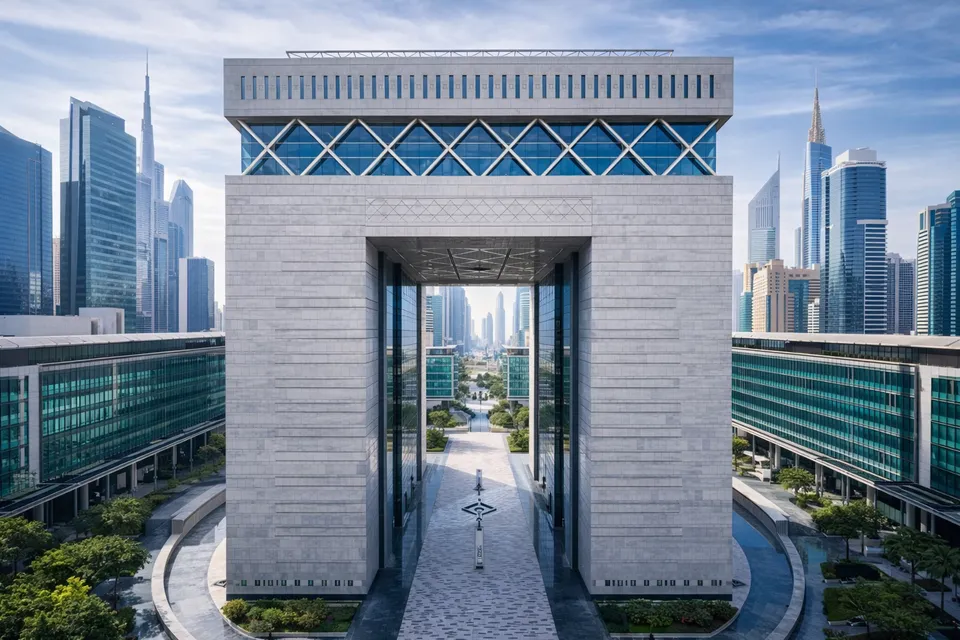
DIFC Dubai area guide
About DIFC
DIFC, or Dubai International Financial Centre, is a special economic zone in Dubai. It covers 110 hectares and was established in 2004 as a financial hub for companies across the Middle East, Africa, and South Asia. The district sits between Downtown Dubai and Business Bay. DIFC has its own legal system based on English common law, with its own courts separate from the UAE federal law. Companies here get 100% foreign ownership and a 50-year guarantee of zero tax on income and profits. The district holds a mix of offices, residential towers, hotels, restaurants, retail outlets, and art galleries.
DIFC’s location and connectivity
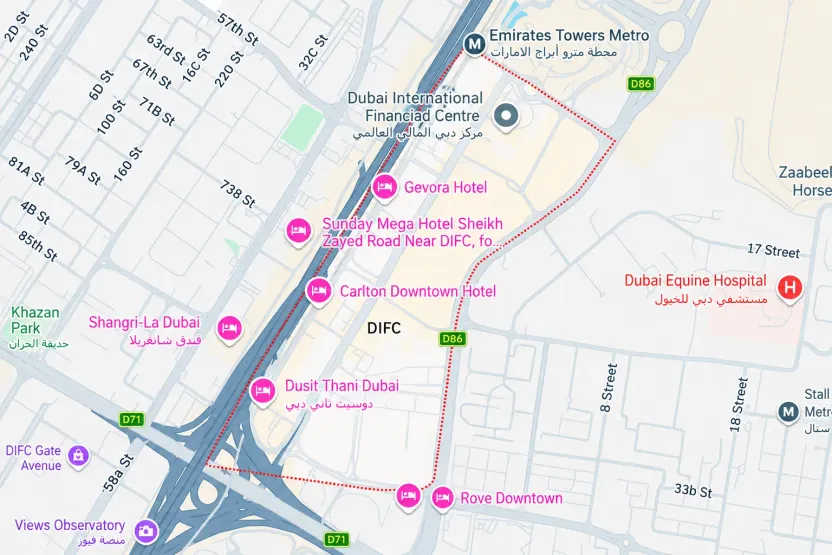
DIFC is on Sheikh Zayed Road (E11) between Downtown Dubai and Business Bay. Dubai International Airport is about 10-15 minutes away by car. Dubai Mall and Burj Khalifa are within a 5-minute drive. Dubai Marina takes around 20-25 minutes in normal traffic. Al Mustaqbal Street runs through the district and links to Financial Centre Road, which connects to the wider highway network. Residents stay close to major work centres across central Dubai.
Transportation and parking in DIFC
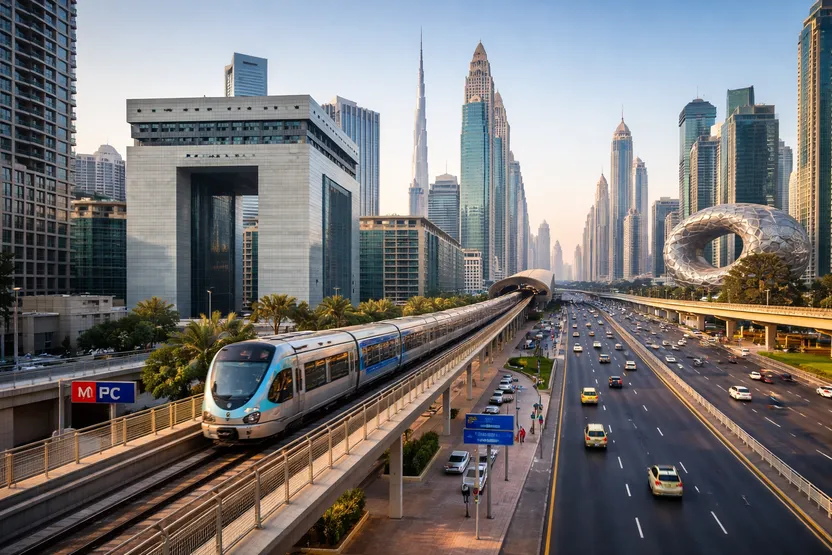
DIFC has good transport links across the city. Residents and visitors can use the metro, buses, taxis, and private cars to reach different parts of Dubai without any difficulty. Here is a closer look at the public transport options available in the area.
Public transport connections
Dubai metro (Red line):
- Financial Centre Metro Station sits directly next to DIFC
- Emirates Towers Metro Station serves the northern edge of the district
- Burj Khalifa/Dubai Mall Metro Station is within 5 minutes
Public bus network:
- RTA buses: 27, 29, 98E, 21B, F28, and F11
Roads and private vehicles
Sheikh Zayed Road handles most vehicle traffic into and out of DIFC. Al Mustaqbal Street and Financial Centre Road manage movement inside the district. Most residential buildings have dedicated basement parking for residents. Visitor parking inside the district is limited. Street parking follows RTA paid zone rules. Traffic on Sheikh Zayed Road can be heavy during morning and evening peak hours.
Who is the DIFC best for?
DIFC suits people who work in finance, law, or business and want to live near their workplace. It is not a budget-friendly area. Life here runs around corporate schedules, high-end dining, and a professional crowd.
Finance and legal professionals
Investment bankers, lawyers, fund managers, and consultants make up the core resident base. Most work inside DIFC itself or nearby in Downtown Dubai and Business Bay. Anyone searching for property for rent in DIFC with a short commute will find DIFC a practical choice. Living within the district cuts daily travel time and keeps professionals close to their offices, clients, and network.
Senior executives and high-net-worth residents
Executives seeking a prestigious address with high-quality amenities choose DIFC for its central location and premium buildings. Units in Park Towers, Index Tower, and Sky Gardens attract tenants who want space, security, and direct access to Gate Avenue. Those looking to buy property in DIFC as a long-term hold consistently shortlist it for its limited supply and strong price growth.
International expats
Professionals from the UK, US, Europe, and South Asia prefer DIFC because the legal system follows English common law. The area has a strong international community, and daily life caters to expat preferences across dining, retail, and social spaces.
Property investors
Investors looking for stable rental income and low vacancy target DIFC because demand from high-income tenants stays consistent. Occupancy rates range from 96% to 99%. Studios and 1-bedroom units in Sky Gardens and Liberty House give the strongest yields at 6.57% to 6.86%. Partnering with a leading real estate company that knows the DIFC market helps investors identify the right building and unit type before stock moves.
Overall, DIFC is best suited to high-income professionals, senior executives, and investors seeking a central address, a stable tenant pool, and long-term capital growth.
Property types in DIFC
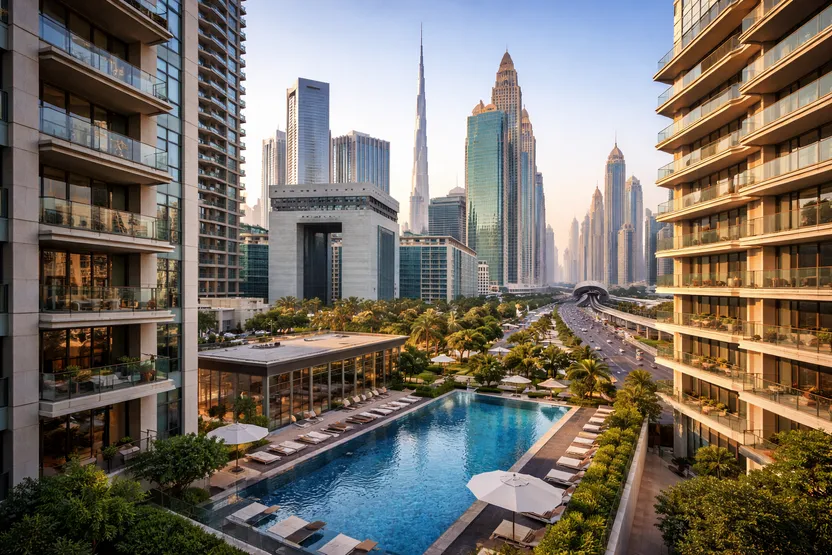
Apartments are the only residential option in DIFC, with all buildings developed as premium high-rise towers featuring floor-to-ceiling windows, modern finishes, and shared amenities such as pools, gyms, and concierge services. For buyers exploring apartments for sale in DIFC, unit sizes range from 450 to 3,200 sq. ft., with an average of around 1,000 sq. ft. Supply across the district remains limited by design, which supports consistent demand.
Apartments in DIFC
Units range from compact studios to large three-bedroom apartments. Layouts suit single professionals, couples, and investors.
DIFC’s property market overview
Let’s take a closer look at what apartments have been selling for, renting for, and earning over the last 12 months.
Schools in and around DIFC
Families in DIFC can access several established schools nearby, mainly in Al Wasl, Jumeirah, Oud Metha, and Umm Hurair. Below are some of the closest known options to DIFC, with curriculum, grade range, and latest KHDA rating.
Nurseries in and around DIFC
Families in DIFC have access to several nurseries within the district and nearby areas such as Downtown Dubai, Trade Centre, Business Bay, Al Wasl, and Jumeirah. Most follow the British EYFS framework and cater to professionals and working parents in the area.
Clinics in and around DIFC
Pharmacies in and around DIFC
Several pharmacies are located in DIFC to serve visitors and professionals.
Pros and cons of living in DIFC
Before choosing to live in DIFC, it is worth looking at both the pros and cons of the area.
Pros of living in DIFC
- Two metro stations on the Red Line are within walking distance.
- Direct access to Sheikh Zayed Road for easy city travel.
- Most residential buildings have dedicated basement parking.
- Offices, restaurants, retail, and galleries are all within the district.
- High occupancy rates between 96% and 99% for investors.
- Strong rental yields with studios at 6.86% and 1-bedroom units at 6.57%.
- The English common law legal system with independent DIFC Courts.
- Dubai Mall and Burj Khalifa are within a 5-minute drive.
- 10% growth in apartment prices was recorded in 2025.
Cons of living in DIFC
- High rent compared to most other areas in Dubai.
- No standard schools within the district boundaries.
- Limited residential supply means fewer unit choices.
- Visitor parking is limited and paid across most zones.
- Traffic on Sheikh Zayed Road is heavy during peak hours.
- Mostly suited for single professionals and couples, not large families.
Landmarks in and around DIFC
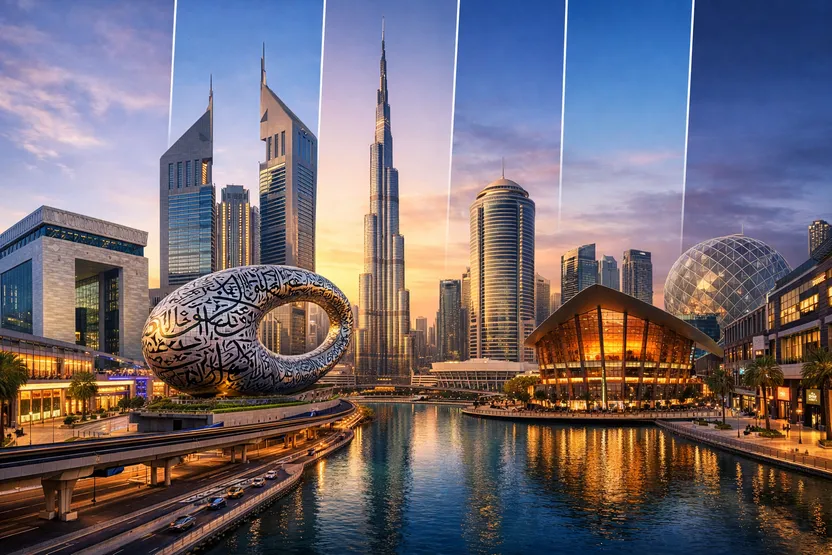
DIFC is home to several well-known landmarks, with additional major destinations such as the Museum of the Future, Emirates Towers, Downtown Dubai, and Dubai World Trade Centre all a short drive away. Below are the closest landmarks within DIFC and nearby.
DIFC ranks among Dubai’s most established mixed-use districts and holds a clear position as a leading business address in the city. The area offers access to reputable schools, nurseries, healthcare providers, pharmacies, and major lifestyle landmarks, which makes it suitable for both professionals and families. Its central location near Downtown Dubai, Sheikh Zayed Road, and other key destinations adds to its overall appeal. For the top real estate company, DIFC stands out as a community offering prestige, convenience, and strong connectivity, which makes it one of Dubai’s most desirable addresses for investment and end use.
Location Details
Frequently Asked Questions
What does DIFC stand for?
+−
DIFC stands for Dubai International Financial Centre, a special economic zone established in 2004 in central Dubai.
What legal system does DIFC follow?
+−
DIFC operates under English common law with its own independent courts, separate from UAE federal law.
Can expats buy property in DIFC?
+−
Yes, expats can buy property in designated freehold projects such as DIFC Living and Park Towers.
Is DIFC good for investment?
+−
Yes. DIFC offers occupancy rates of 96 to 99%, stable tenants, and gross yields between 4.33 and 6.86%.
Is DIFC a tax-free zone?
+−
Yes. DIFC offers a 50-year guarantee of zero tax on corporate income and profits for registered companies.
How many FinTech companies are in DIFC?
+−
Over 1,677 FinTech and AI companies were registered in DIFC as of early 2026, across blockchain, InsurTech, and RegTech sectors.
What is DIFC 2.0?
+−
DIFC 2.0 is the district's expansion strategy focused on new residential, commercial, and tech-driven developments through 2030 and beyond.
What is the rental law in DIFC?
+−
DIFC is a free zone but follows Dubai rental laws. Tenants must register with EJARI, and landlords follow the RERA rent index.
What is the DIFC 2030 strategy?
+−
DIFC's 2030 strategy targets growth through FinTech, AI, innovation licensing, and expanding the district's commercial and residential footprint.
Get expert advice about DIFC Dubai
Connect with our local experts to learn more about living, buying, or renting in DIFC Dubai.
Why choose our experts?
- • Local market knowledge
- • Personalized recommendations
- • Free consultation
- • No obligation advice