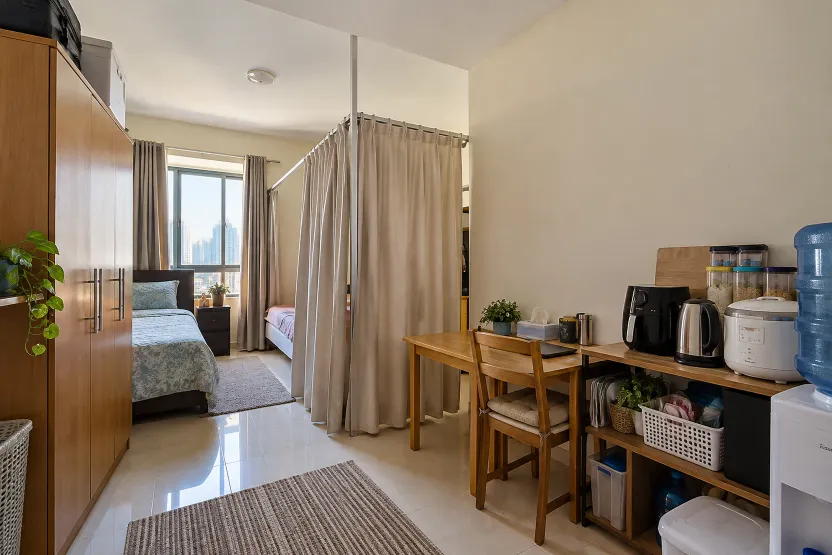
Dubai’s new shared-housing rules under Law No. 4 of 2026: approved areas, permits and penalties
Dubai introduced new shared-housing rules under Law No. 4 of 2026, with landlords given until 8th September 2027 to bring existing arrangements into compliance. The law took effect in August 2026 and applies across designated areas of Dubai.
Landlords must check the relevant permit requirements and occupancy limits and ensure rental contracts are properly registered. A first breach can result in a fine of up to AED 500,000.
If you rent out individual rooms or bed spaces, you will need the required permits and a property that meets Dubai’s shared-housing standards before the compliance deadline.
Key takeaways
- Dubai’s new shared-housing rules require landlords to secure the necessary permits and comply by 8th September 2027.
- Shared accommodation is permitted only in designated areas and approved properties.
- Violations can lead to fines of up to AED 500,000, with repeat offences potentially reaching AED 1 million.
- Rents may rise as landlords cover compliance costs and adjust occupancy levels.
Shared housing permits and compliance deadlines in Dubai
If your shared-housing property is already operating, you still have time to prepare for the new requirements. Reports have cited compliance deadlines in late August and early September 2027, so landlords should confirm the official deadline with Dubai Municipality and work towards the earlier date until the authority clarifies which one applies.
The grace period does not permit unsafe room partitions or unapproved alterations. Shared housing must have the required municipal approvals in place to operate legally.
Who can legally operate shared housing?
- Property owners and licensed businesses can rent out approved shared accommodation in Dubai.
- Authorised operators can manage a property for its owner or lease it under an arrangement that permits subletting.
- Regular tenants cannot rent out rooms or beds independently. A landlord's permission alone does not replace the required government permit.
What should landlords check before applying?
Before spending money on renovations or advertising, coordinate with Dubai Municipality, the Dubai Land Department (DLD), Civil Defence, and the Real Estate Regulatory Agency (RERA) to:
- Confirm that the plot is approved for shared housing.
- Check the permitted number of residents and the approved layout.
- Obtain the necessary approvals before changing the layout or advertising the accommodation.
Shared housing rules for room sizes and occupancy
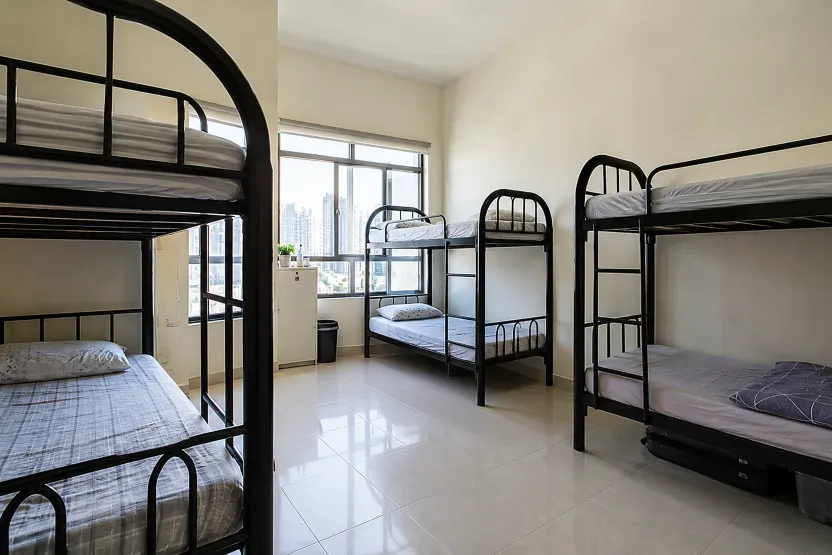
Dubai's rules require each shared unit to accommodate either single individuals or families. The two groups cannot share the same unit. The same restriction applies to an entire building or villa, which must be dedicated to one category. In family accommodation, each family must have its own bedroom and bathroom.
Shared homes for single individuals must also meet minimum space and facility requirements. Here's what landlords need to provide:
Bedroom space: Each resident must have at least 5 square metres (54 sq.ft.) of bedroom space.
Kitchen space: Allow at least 1 square metre (19.7 sq. ft.) of kitchen space per resident.
Bathrooms: Provide one full bathroom for every four residents. If toilets and showers are in separate rooms, there must be one toilet for every four people and one shower for every six.
Shared facilities: The property must have a dining area and a lounge. Laundry facilities and a place to dry clothes are required too.
Bicycle parking: Provide enough spaces equivalent to at least 10% of a building's total number of residents.
A large apartment or villa doesn't automatically qualify as shared housing. It must strictly match the approved layout, pass safety checks, and stay within its permitted occupancy limit.
Approved areas for shared housing in Dubai

Dubai Municipality has identified around 43 to 44 designated areas for shared housing, but rules can vary by area. Check the official municipal map and confirm that your specific property qualifies before signing a lease or starting renovation work.
The approved areas fall into two categories.
Individual shared accommodation is not allowed along Sheikh Zayed Road, Jumeirah Road, Al Wasl Road and Baniyas Road. These roads are reserved for family shared housing under the stated rules.
Rent payments and penalties for breaking shared housing rules
Rent is payable monthly in advance unless the landlord and tenant agree to a different payment schedule in the contract. Water and electricity bills are included in the rent by default, but both sides can agree on different terms. Every shared-housing contract, along with any amendments, must be recorded in the city's official registry.
Fines range from AED 500 to AED 500,000 for violations. Anyone who repeats the same violation within one year can face double the original fine, up to AED 1 million. Depending on the breach, authorities can suspend operations for up to six months, revoke permits, cancel trade licences, disconnect utilities or order a property to be vacated.
Will the rules make rent cheaper?
Rent isn't guaranteed to fall under the new rules. The new rules limit the number of people who can share a property, and landlords will face costs to meet legal requirements. These expenses could push up the price per bed in approved areas. Properties in restricted areas will need to stop operating illegally or move to approved locations. Some owners may choose to rent their homes on the regular market instead.
If you're deciding between a registered room and an apartment for rent in Dubai, compare the total cost rather than relying on the advertised rent alone. Remember to include:
Utilities: Check whether water and electricity bills are included.
Transport: Work out your regular travel costs.
Deposits: Find out the amount due before moving in.
Contract terms: Read the payment rules and other rental conditions before signing.
A studio apartment for rent in Dubai offers more privacy, but renting an entire unit requires a larger upfront budget. Market outcomes will depend on the supply of compliant homes and the costs landlords face to meet the new rules. Staying up to date on the latest Dubai real estate news can help tenants and property owners understand market changes.
If shared housing no longer fits your budget or living needs, a real estate agency in Dubai, such as betterhomes, can help you explore conventional rental options.
Conclusion
Dubai’s new shared-housing rules will bring important changes for landlords and tenants. The challenge will be to improve safety and living conditions without making affordable accommodation harder to find. Landlords will need to meet the new requirements, while residents will need suitable housing options within their budgets. The coming year will show whether Dubai can improve shared living conditions while keeping rents affordable for people who depend on this type of accommodation.
Want to see what these changes could mean for rental prices across the city? Check the latest Dubai market reports from betterhomes for insights into rental trends and property market activity.
Frequently asked questions
Does Dubai’s shared-housing law apply to existing rental agreements?
+−
Yes. Owners and operators already running shared accommodation must bring their properties and operations into compliance by 8th September 2027.
Who handles disputes between landlords and tenants in shared accommodation?
+−
Dubai’s Rental Disputes Centre has jurisdiction over disputes concerning the rights and obligations established under the shared-housing law. Tenants and landlords should retain their contracts, payment records and relevant correspondence to support their case.
Must shared-housing operators display their permit at the property?
+−
Published guidance states that operators must display a sign at the property entrance identifying the permit holder in Arabic and English and stating the approved accommodation category. Prospective tenants can ask to see this information before agreeing to rent a room.
How long does a shared-housing permit remain valid?
+−
Shared-housing permits are valid for one year and may be renewed for similar periods. Owners can request a two-year permit where permitted. Renewal applications must be submitted at least 30 days before expiry
Can a landlord rent a shared-housing property through a property management company?
+−
Yes. An authorised property management company in Dubai can manage a property on the owner’s behalf or lease it from the owner for permitted subletting. The company must hold the required authorisation, and the arrangement must comply with the law.