
Eviction notice in Dubai: types, notice periods and how to serve it
An eviction notice in Dubai is a formal step that can affect both landlords and tenants. A landlord cannot simply ask a tenant to leave because the tenancy has become inconvenient. The reason, notice period, and method of service all matter. Dubai tenancy rules set out specific situations where a landlord can seek eviction.
Some cases require a notice period before legal action, while others involve a tenant breach, such as unpaid rent or unauthorised subletting. Whether you're a landlord or a tenant, knowing the rules helps you avoid delays and protect your position.
Disclaimer: This guide is for general information only and isn't legal advice. Rules can change, so check your case with the relevant authority or a legal adviser before you act.
Key takeaways
- An eviction notice in Dubai must match the reason for eviction and the applicable notice period.
- Personal use, sale, demolition, and qualifying restoration generally require 12 months' notice.
- Rent default and certain tenancy breaches can involve a 30-day compliance period after formal notice.
- A notice can face problems if the reason, deadline, or service method is incorrect.
- Serving notice through a Notary Public or registered mail gives you formal proof of delivery.
What is an eviction notice in Dubai?
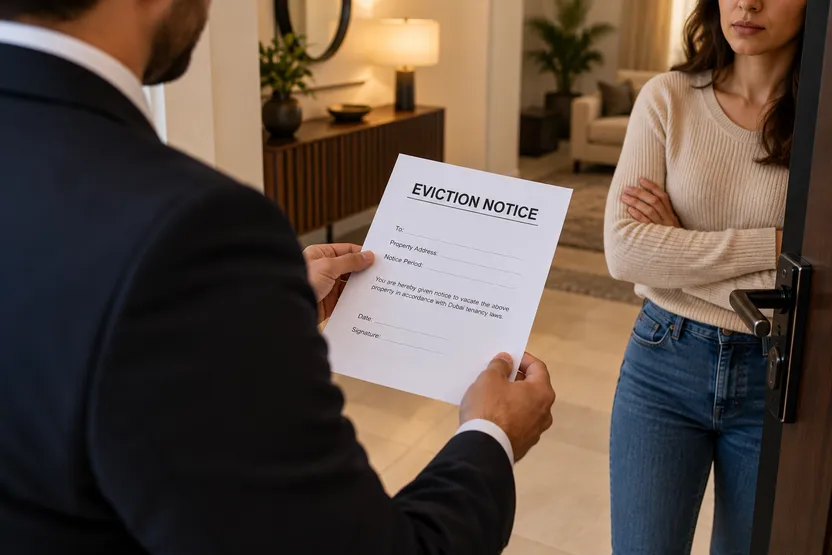
A tenant eviction notice is a formal written notification from a landlord to a tenant that requires the tenant to vacate the rented property or correct a specific breach. The type of notice depends on the reason behind the proposed eviction. A landlord who wants possession for personal use follows a different route than one dealing with unpaid rent.
A phone call, message, or casual conversation may communicate an intention to end a tenancy, but it does not replace the formal notification process required for many eviction claims. Dubai Land Department (DLD) guidance also confirms that a valid tenancy contract can’t be cancelled by one party during its term unless there is mutual agreement or a legally recognised reason for termination.
Main types of eviction notice in Dubai
Dubai's tenancy framework recognises several situations where a landlord may seek possession. Knowing the reason first makes the notice period easier to understand.
Reasons and their notice types
Eviction for unpaid rent
A landlord can seek eviction if the tenant fails to pay rent or part of the rent after receiving a formal demand for payment. The tenant generally receives at least 30 days from service of the notice to settle the outstanding amount, unless the parties have agreed to different terms permitted under the tenancy arrangement.
Proof of service matters. A landlord should retain the notice, delivery evidence, and payment records. Tenants who believe the landlord has refused rent can use the Rental Disputes Centre's (RDC) procedures to deposit the rent through the prescribed process.
Eviction for unauthorised subletting
A tenant can’t sublet the property without the landlord's written approval where such approval is required. Unauthorised subletting can give the landlord grounds to seek eviction. The issue may apply to both the original tenant and the unauthorised subtenant. Landlords who use one of the property management companies in Dubai can ask their manager to check written approvals and tenancy records before anyone new moves in.
Eviction for illegal or improper use
A landlord can seek eviction if the tenant uses the property for an illegal purpose or for activity that conflicts with public order or accepted standards. A similar issue arises when a tenant uses a property for a purpose different from the use agreed in the tenancy contract or permitted under planning and land use rules. The notice should identify the relevant breach so the tenant understands the basis of the claim.
Eviction because of serious property damage
Serious damage can also support an eviction claim. The issue may arise when a tenant makes changes that threaten the property's safety, deliberately causes significant damage, or shows gross negligence that leads to damage. Normal wear and tear is different from serious damage. Evidence such as inspection reports, photographs, maintenance records and correspondence can help establish what happened.
Eviction involving commercial property
Special rules apply to commercial premises. A landlord may seek eviction if a commercial property remains vacant without a valid reason for 30 consecutive days or 90 non-consecutive days within a year. The rule targets cases where a tenant has effectively stopped using the commercial premises without a valid explanation.
Eviction because the property is unsafe
A landlord may seek eviction where the property faces a risk of collapse. Technical evidence from the relevant Dubai authority can be required to establish the condition of the property. Safety concerns should be treated seriously. A tenant should not ignore a notice linked to structural problems or an official safety requirement.
Eviction for demolition or major reconstruction
A landlord may seek possession where government requirements require demolition and reconstruction. Similar grounds can apply where the owner needs to demolish the property, rebuild it, or add structures that prevent the tenant from using the premises. The landlord must get the required approvals and permits from the relevant authorities before relying on these grounds.
Eviction for major restoration or comprehensive maintenance
Major restoration can justify eviction when the required work cannot reasonably take place while the tenant remains in the property. A technical report may be needed to establish the property's condition and show why vacant possession is necessary. A 12-month notice period applies.
Eviction for personal use
A landlord may seek possession if the owner intends to use the property personally or for a first-degree relative, subject to the applicable legal conditions. The owner may need to demonstrate that there is no other suitable property available for the intended purpose. A 12-month notice period applies to this type of eviction. The notice should state the reason and the intended eviction date.
Eviction because the property is being sold
Selling the property can also be a recognised reason for eviction, provided the required legal conditions are met. A landlord can’t simply tell a tenant to leave because a buyer has appeared. They'll need to serve formal notice and allow the full 12 months.
If you're looking at apartments for sale in Dubai, check whether there's a tenant in place and what notice, if any, has been served before you complete.
What is the notice period for eviction in Dubai?
The required period depends on the reason for eviction. For personal use, sale, demolition, reconstruction, and certain major restoration situations, the landlord generally needs to provide at least 12 months' notice before the intended eviction date. For unpaid rent, the tenant generally receives at least 30 days after formal notice to make the required payment.
Certain other contractual or legal breaches may also include a 30-day period after formal notice, which requires the tenant to comply. Lease renewal is a separate issue. DLD guidance states that changes to the rental contract or rent normally require at least 90 days' notice before expiry unless the parties agree otherwise. If you're looking at apartments for rent in Dubai, check the renewal and notice clauses before you sign.
What must an eviction notice contain?
An eviction notice should give the tenant enough information to understand what the landlord is asking and why.
A proper notice should generally identify:
- The landlord and tenant.
- The rented property's details.
- The tenancy or Ejari details.
- The reason for eviction or required action.
- The date by which the tenant must vacate or comply.
- Any relevant outstanding obligation, such as unpaid rent.
- The method used to serve the notice.
A legal notice isn’t a simple eviction message. The reason needs to match the legal ground the landlord is relying on. The notice should also give a date that respects the applicable notice period. A landlord should keep the original notice and evidence that shows when and how it reached the tenant.
How should an eviction notice be served?
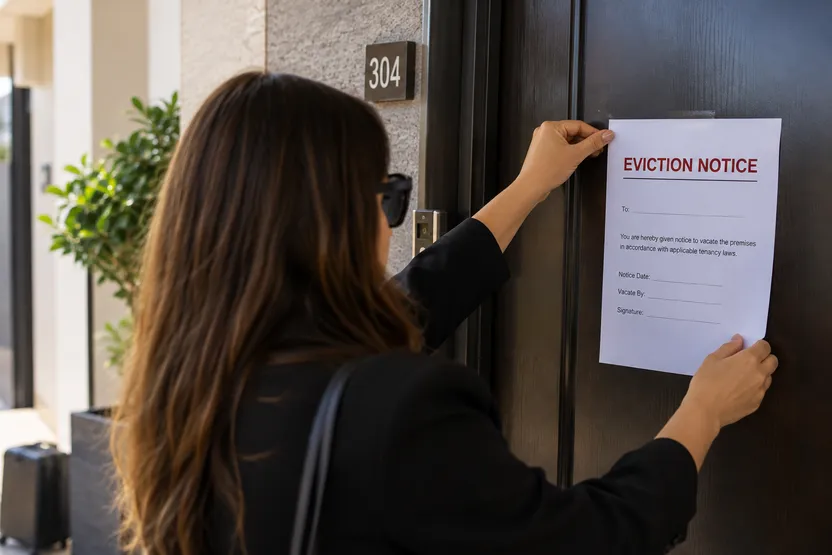
Formal service is one of the most important parts of the process. For eviction claims, Dubai authorities recognise service through a Notary Public or registered mail. The landlord should use a method that creates reliable evidence of notification and delivery. When an eviction claim is filed, the Rental Disputes Centre (RDC) asks for a copy of the notarised notice with the notification report, or the registered post documentation and acknowledgement of receipt.
A landlord should therefore avoid relying only on informal messages. Digital communication can still be useful as supporting evidence, but it isn't a replacement for the formal method required for the eviction claim. Tenants should keep envelopes, delivery records, emails, payment evidence, and copies of notices received.
What can make an eviction notice invalid?
An eviction notice can be invalid if it doesn’t comply with the applicable requirements.
Common issues include:
Wrong notice period: Giving less than 12 months where the law requires a full year.
Wrong delivery method: Informal communication may not satisfy the formal service requirement for an eviction claim.
Missing reason: A notice based on personal use, sale, or another specific ground should state the reason.
Incorrect eviction date: The date should allow the required notice period.
Weak evidence: A landlord may struggle to prove delivery, the breach or the factual basis for eviction.
Unclear property details: Errors in identifying the rented premises can create unnecessary disputes.
Failure to follow the tenancy contract: Contractual requirements should also be reviewed before serving notice.
An incorrect notice doesn’t necessarily mean the landlord has no right to seek eviction. It can mean the notice needs to be corrected or the process needs to begin again.
RERA eviction notice: what tenants should know
'RERA eviction notice' is the term many people use for a Dubai eviction notice. The Real Estate Regulatory Authority (RERA) is the regulatory arm of the DLD, and eviction disputes go to the RDC. Tenants should go by the legal requirements rather than informal advice online.
A tenant who receives a formal notice should check the stated reason, service method, eviction date and supporting evidence. A dispute can be taken to the Rental Disputes Centre if the landlord is attempting an unlawful eviction. Landlords should also verify their documents before serving notice. A properly prepared Ejari registration record can help establish the tenancy details and support the wider rental file.
What should tenants do after receiving a notice?
Don’t ignore the notice. Start by checking the reason and deadline.
A tenant can:
- Review the Ejari and tenancy contract.
- Check when and how the notice was served.
- Confirm the stated eviction reason.
- Keep proof of rent payments.
- Respond in writing if the facts are disputed.
- Get legal advice if the dispute is complex.
- Approach the Rental Disputes Centre if an unlawful eviction issue can’t be resolved.
Tenants should also plan their next property search early when a valid 12-month notice has been served.
What should landlords do before serving notice?
A landlord should first identify the exact legal ground for eviction. Then check the tenancy record, rent history, property documents, and supporting evidence. The notice should use the correct period and formal delivery method. Keep copies of all documents.
Landlords who hire a top real estate agency in Dubai should make sure the agent understands the formal notice process. Property marketing and eviction are separate matters, so an agent's message to a tenant should not be treated as a substitute for formal service.
What happens if the tenant does not leave?
A notice doesn’t mean the landlord can physically remove the tenant. If the tenant doesn’t vacate after a valid notice and the landlord has a legal basis to seek possession, the landlord can approach the Rental Disputes Centre. The centre handles rental disputes between landlords and tenants and can issue decisions that may then move into enforcement.
A landlord shouldn’t disconnect utilities, change locks or use force to pressure a tenant into leaving. Such actions can create a separate dispute. Tenants facing pressure to leave before the lawful date can also approach the Rental Disputes Centre.
Finding your next home after an eviction notice
An eviction notice can create pressure for a tenant who needs a new home, but rushing into another lease can create fresh problems. Check the property's condition, tenancy terms, Ejari requirements and notice clauses before signing. Confirm the move-in date too, so there's no gap between homes. Our Dubai real estate news covers rental market changes that can help you plan.
Conclusion
An eviction notice in Dubai needs more than a request to vacate. The reason, notice period, wording, delivery method, and supporting evidence all matter. A 12-month period generally applies to major grounds such as personal use, sale, demolition and certain restoration cases. Other breaches can involve a shorter compliance period, which depends on the circumstances. Tenants should review notices carefully and seek help if they believe the eviction is unlawful. Landlords should also verify every step before serving the notice.
If you're a tenant planning your next move, browse our houses for rent in Dubai. If you're a landlord preparing to serve notice, speak to our property management team, and we'll help you get the paperwork right.
Frequently Asked Questions
Can a landlord evict a tenant in Dubai without giving notice?
+−
No, a landlord generally cannot demand immediate possession without following the applicable legal process. The required notice period depends on the reason, tenancy terms and circumstances surrounding the proposed eviction.
How long is an eviction notice for personal use in Dubai?
+−
A landlord who wants possession for personal use generally needs to provide the tenant with at least 12 months' notice and meet the conditions applicable to personal occupancy.
Can a tenant challenge an eviction notice in Dubai?
+−
Yes. A tenant can challenge an eviction through the Rental Disputes Centre (RDC) if the notice, reason, serving method, or eviction process does not comply with applicable tenancy requirements.
Can a landlord evict a tenant because the property is sold?
+−
Yes. A sale can be a legal ground for eviction, subject to applicable conditions and formal notice. A tenant generally receives 12 months' notice before the required eviction date.
Can a landlord change the locks after sending an eviction notice?
+−
No. A landlord shouldn't change the locks. Possession should follow the lawful process and any required Rental Disputes Centre decision.
What happens if a tenant ignores an eviction notice?
+−
Ignoring a valid notice can lead to a rental dispute and enforcement proceedings. Tenants should review the notice, meet legitimate obligations, and seek assistance promptly if they dispute it.
Does an eviction notice cancel the Ejari immediately?
+−
No. An eviction notice doesn't cancel the tenancy or Ejari on the day it is served. The tenancy continues according to applicable rules until lawful termination or possession occurs.
Can a landlord evict a tenant for unpaid rent in Dubai?
+−
Yes, a landlord can seek eviction for unpaid rent after serving the required formal notice and giving the tenant the applicable period to settle the outstanding amount before pursuing the claim.
What documents should a tenant keep after receiving an eviction notice?
+−
A tenant should keep the eviction notice, Ejari, tenancy contract, payment records, delivery evidence, landlord communications, and relevant property documents. These records can help establish the facts during any dispute.