
How to choose a school in Dubai: A parent's step-by-step guide
Choosing a school is one of the first major decisions many families face after moving to Dubai. What looks simple from the outside can quickly become more complicated once the fee sheets arrive, waiting lists appear, and the drive from a preferred home to a preferred school turns out to be 40 minutes each way.
School choice can affect the family budget, the daily routine, and even the postcode a family ends up in. KHDA data puts Dubai at 227 private schools teaching 387,441 students from 185 nationalities, with enrolment up around 6% in 2025. Government schools mainly serve Emirati students, while access for expatriate families is limited and fee-paying, so in practice the private school system carries most of the demand.
The steps below cover the fees, ratings, curricula and neighbourhood trade-offs parents should consider before enrolment day.
Key takeaways
- Set a realistic school budget that accounts for tuition, registration, transport, uniforms and other annual expenses.
- Choose a curriculum that matches your child’s education needs and your family’s future plans.
- Check the latest KHDA rating and fee fact sheet to understand each school’s performance and approved charges.
- Compare school locations with nearby residential communities to keep daily travel times manageable.
- Visit shortlisted schools, check year-group availability and apply early to improve your chances of securing a place.
Step 1: Set the budget first
Fees are one of the first considerations for most families. The average private school fee for 2026 to 2027 is around AED 42,000 per year, but the range runs from under AED 10,000 at some Indian curriculum schools to more than AED 120,000 at higher-priced British and IB schools.
Families should budget beyond tuition too. A registration deposit can be around 10% of the annual fee, while school transport may cost roughly AED 5,000 to AED 12,000 depending on the school and distance. Uniforms, trips and activities can add further costs.
KHDA approved no fee increase for the 2026 to 2027 academic year, and schools that have been open for less than three years cannot increase their fees.
Step 2: Match the curriculum to future plans

Dubai offers 17 curricula, although four account for most pupils. The British curriculum has the largest share at around 37%, followed by Indian curricula, including CBSE and ICSE, at around 26%. American and IB schools account for much of the remaining market.
The right choice often depends on where the family expects to live next. A family planning to return to India may prefer CBSE, while families who relocate between countries may find British or IB curricula easier to transfer between school systems.
British schools also account for 16 of Dubai’s 23 Outstanding-rated schools.
Step 3: Check the KHDA rating
Almost every established private school in Dubai has a KHDA rating. New campuses are generally not inspected during their first two years, while many current ratings date from the 2023 to 2024 inspection cycle because full inspections were paused for two years.
The rating gives families an indication of overall school performance and, in normal years, can also influence permitted fee increases. For 2026 to 2027, however, KHDA has frozen private school fees, so schools cannot increase tuition regardless of their rating.
Around 81% of students attend a school rated Good or above. Full inspections are expected to resume in the 2026 to 2027 cycle, so families should check both the latest KHDA rating and the school’s current fee fact sheet before making a decision.
The current rating breakdown is:
- Outstanding: 23 schools
- Very Good: 48 schools
- Good: 81 schools
- Acceptable: 48 schools
- Weak: 2 schools
Step 4: Map the school against the neighbourhood
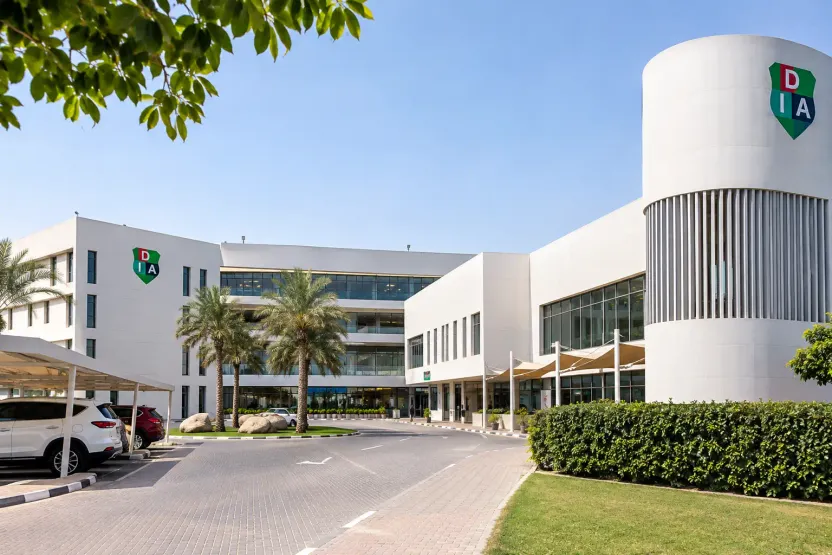
Dubai does not operate strict school admission zones, so a preferred school can still be an hour away from home. In practice, a long school run can quickly become tiring, which is why the home search and school search should be considered together.
Dubai Hills Estate combines well-rated schools, villas, townhouses and apartments within one master plan. Families looking for villas may also consider Arabian Ranches, where established schools are within the community and properties for sale cover a wide range of budgets.
Apartment buyers and renters can benefit in the same way from choosing a well-connected building close to schools and public transport. City Tower 1 is one example, with metro access and schools nearby.
Step 5: Visit and check the details
Ratings and fees can help narrow the shortlist, but a school visit can make the final decision easier. Walk around the campus, observe the learning environment and ask about the waiting list for the relevant year group.
The school admission age rule changes in 2026. For the 2026 to 2027 academic year, the cut-off moves from 31st August to 31st December. This may make some children eligible who previously fell outside the age requirement by a matter of weeks.
Families should also confirm the payment schedule. Most schools divide annual tuition into three term payments, while some offer monthly payment plans for an additional fee.
When to apply for school admission in Dubai?
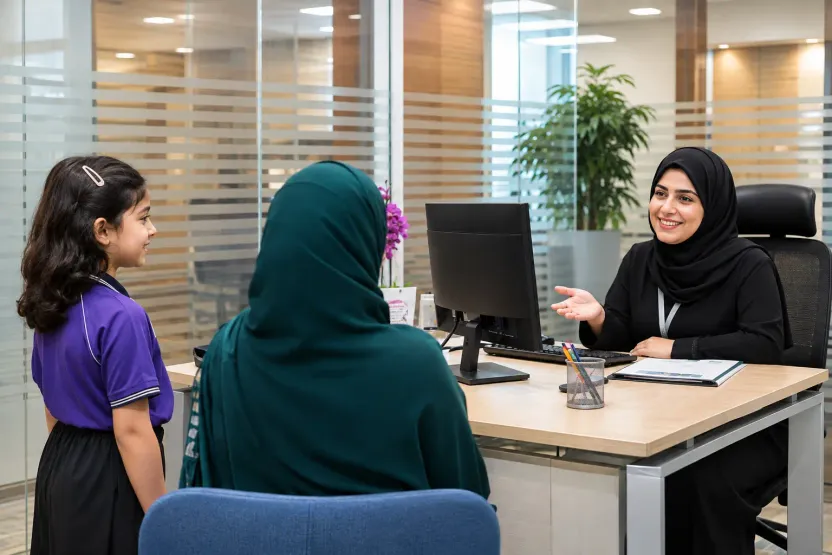
Popular schools can fill quickly, so timing matters. Applications for an August start often open during the previous autumn, typically between September and November, while some top-rated schools maintain waiting lists that can run for a year or longer.
Many British and selective schools also require a short entry assessment before making an offer, so it is worth booking this early. A place is generally secured only once the required deposit has been paid. Families transferring from another school will also need a transfer certificate to complete registration.
Applying to two or three schools can give families more flexibility.
New options continue to enter the market too. Around 15 new private schools opened over the past two academic years, while KHDA is reviewing more than 30 further applications. Keeping an open mind about newer schools can therefore widen the shortlist and provide additional options where places are available.
Conclusion
Choosing a school in Dubai becomes easier when families consider the main factors together. Budget sets the financial limits, the curriculum determines the educational fit, the KHDA rating helps narrow the shortlist and the daily drive can influence where a family ultimately chooses to live.
Getting those decisions in the right order can help the home and school work together for the longer term. Dubai real estate insights can help families understand which communities keep homes, schools and everyday amenities within easy reach.
Families ready to start their property search can also speak to betterhomes consultants, who can compare communities based on school location, budget and daily travel time before arranging viewings.
Frequently asked questions
How much should a family budget for school in Dubai?
+−
A useful starting point is the annual tuition fee plus roughly 15% to 25% for additional costs such as transport, uniforms and the registration deposit. Indian curriculum schools tend to sit at the more accessible end of the tuition range, while premium British and IB schools can cost considerably more.
Does a school's KHDA rating change what it can charge?
+−
Yes. In normal years, KHDA ratings can affect the permitted level of annual fee increases. For the 2026 to 2027 academic year, however, private school fees are frozen by KHDA.
The school’s KHDA fee fact sheet lists mandatory and optional charges, so families should check it before committing. Those looking for a home near established schools may also consider communities such as Al Reem 1 in Arabian Ranches.
Which curriculum is most popular in Dubai?
+−
The British curriculum is the most popular, accounting for around 37% of pupils, followed by Indian curricula at around 26%. American and IB schools account for much of the remaining market.
Do families need to live near the school?
+−
No. Dubai does not operate strict school admission zones based on where a family lives. However, a shorter school run can save several hours of travel each week, so many families choose to buy or rent close to their preferred campus.
Properties for sale in Dubai Hills Estate, for example, sit close to several well-rated schools, making the community a common consideration for families balancing home and school locations.
Do newer schools cost less?
+−
Not necessarily. However, a school that has been open for less than three years cannot increase its fees, which means its approved tuition remains unchanged during that initial period.
What documents does school enrolment need?
+−
Families generally need the child’s passport, residence visa, Emirates ID, birth certificate, transfer certificate, recent school reports and passport photos.