Shaping Skylines: Dubai Residential Real Estate FY 2025
What really drove Dubai’s property market in 2025
2025 marked a shift from momentum to maturity. Dubai’s residential market didn’t surge on speculation or stall at year-end; it expanded with consistency, balance, and depth. Transactions rose, values climbed, and activity stayed broad-based across price points, property types, and buyer profiles.
The betterhomes FY 2025 Dubai Residential Market Report breaks down who’s buying, what’s moving fastest, where demand is concentrating, and why the market has shifted from rapid acceleration to sustainable growth.
At a glance
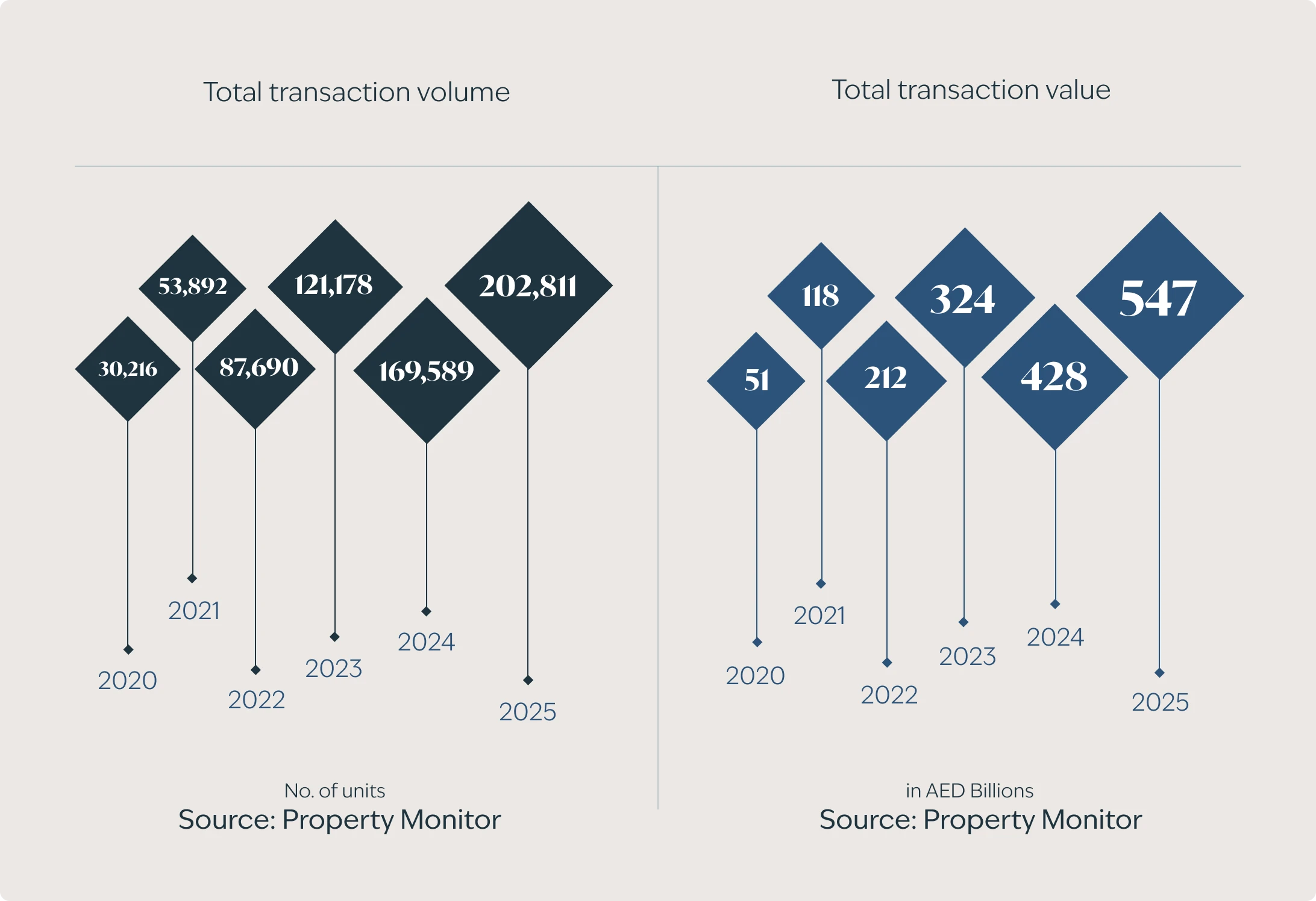
- AED 547 billion in sales from 203,000 transactions
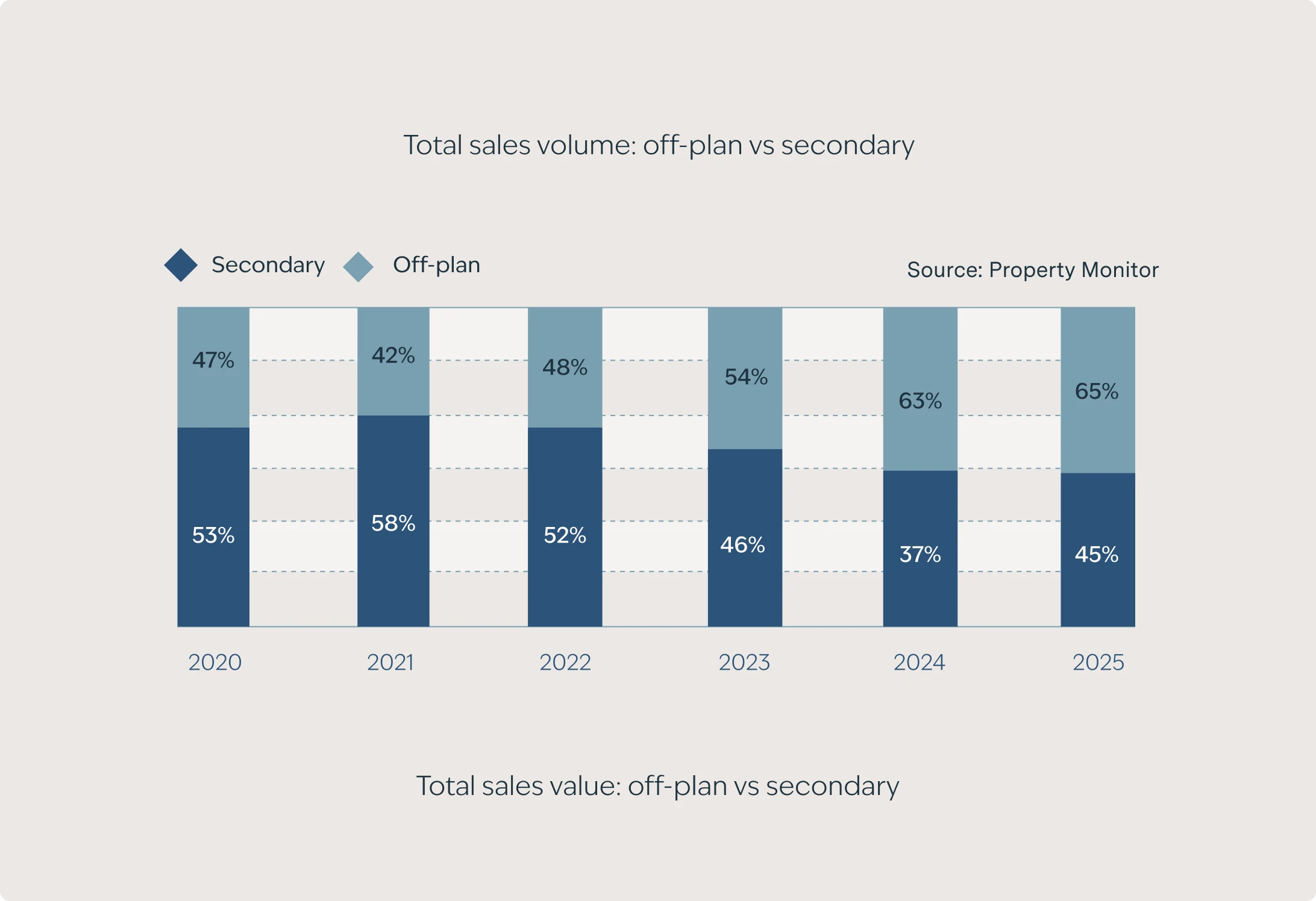
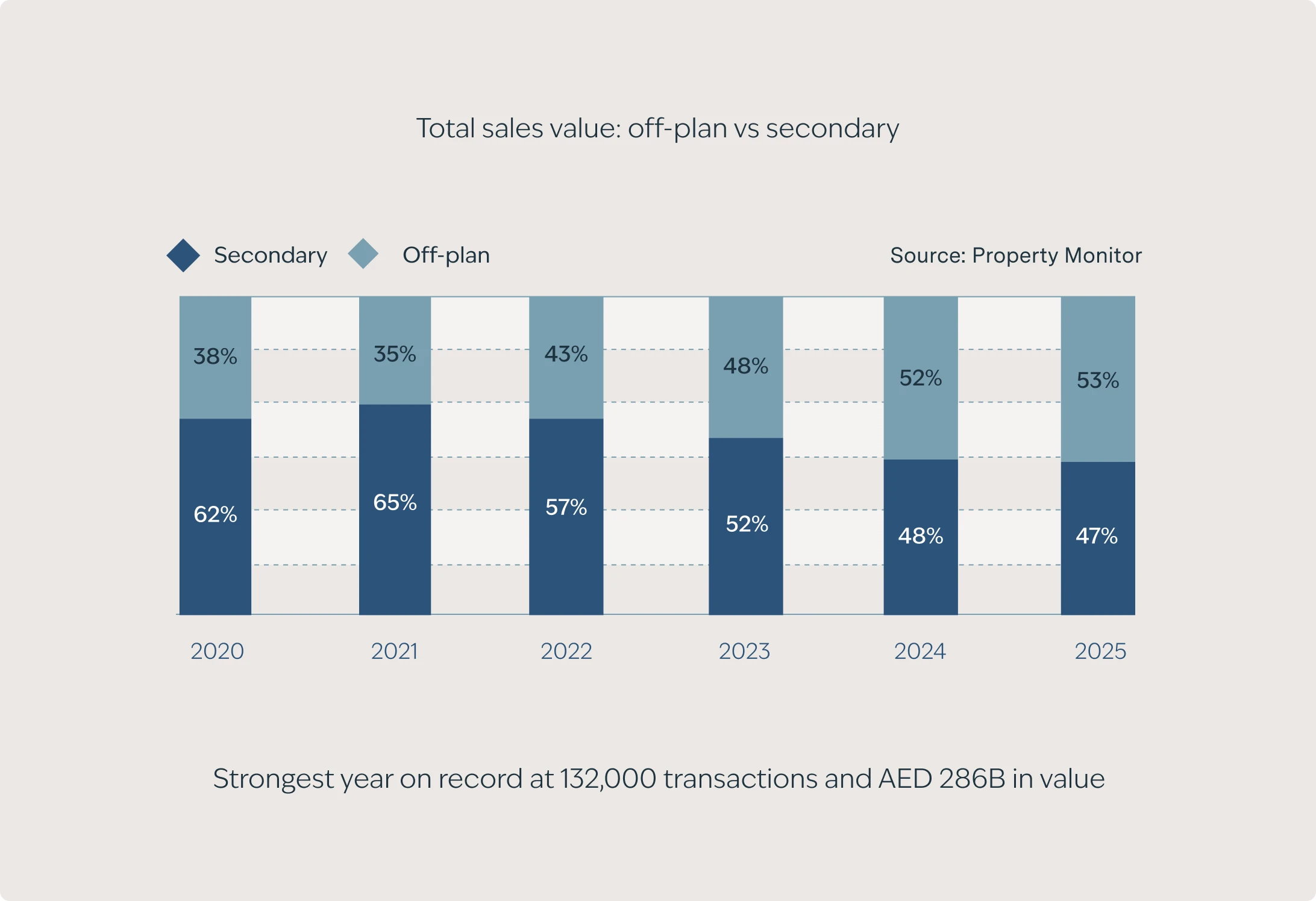
- 65% of sales came from off-plan homes
- 72% of deals fell between AED 500K and AED 3M
- Studios, one-beds, and two-beds made up 77% of sales
- Apartments delivered AED 325 billion from 167,000 deals
- Villas and townhouses reached AED 221 billion
- Average price hit AED 1,673 per sq ft
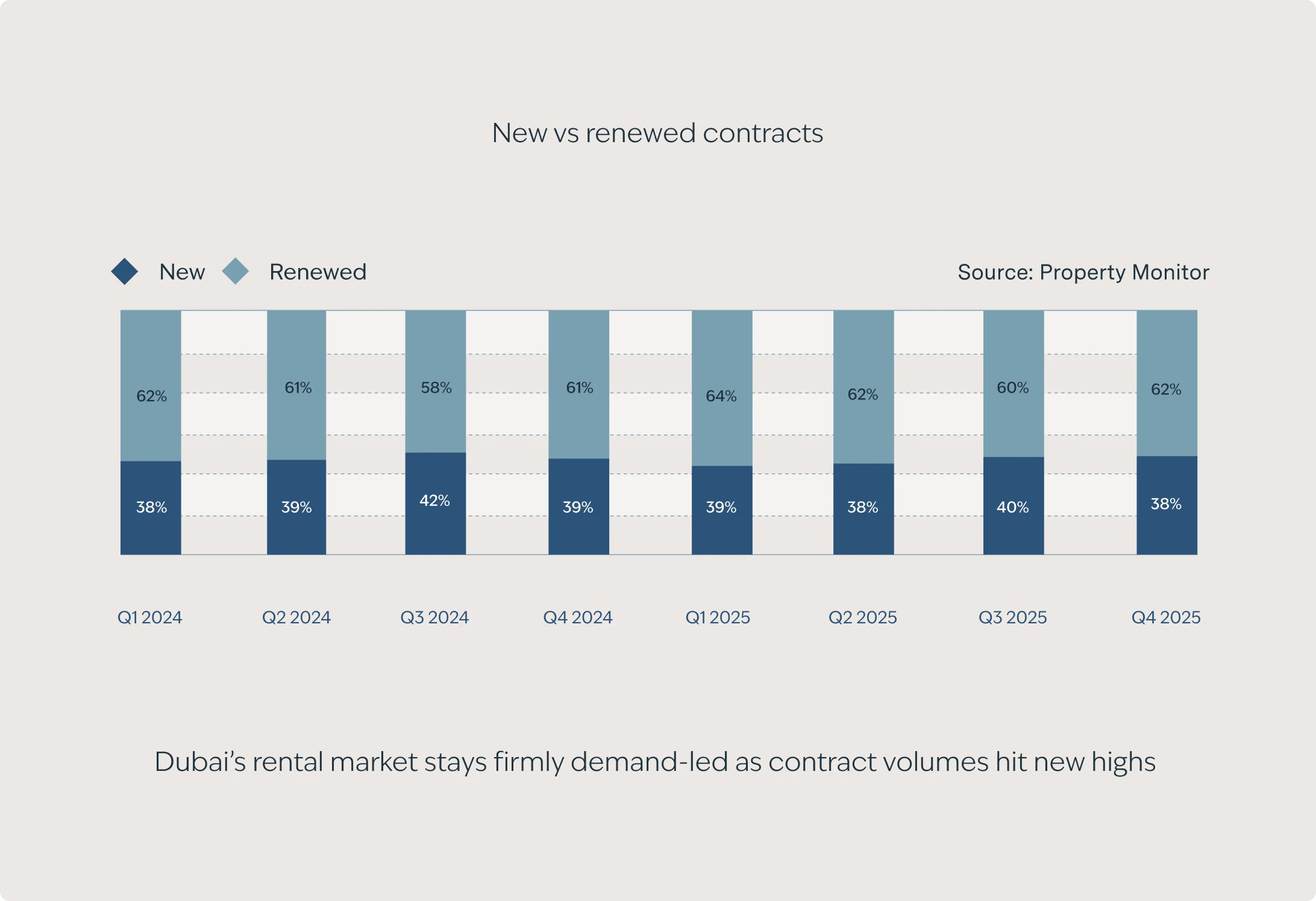
- Rental contracts reached 530,000
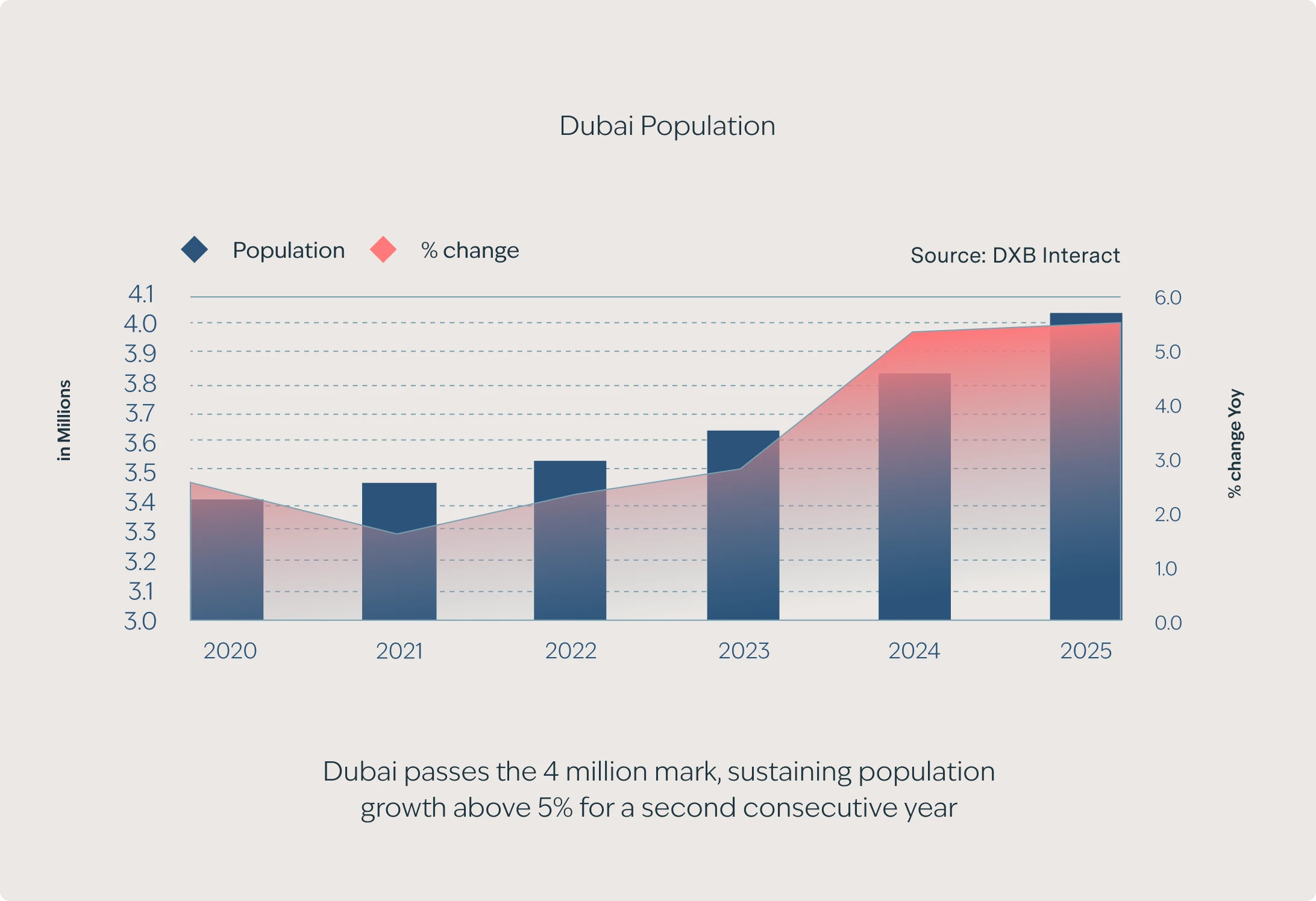
- Dubai’s population passed 4 million
Is Dubai’s property market still growing?
Yes. And not in a fragile, headline-only way.
Dubai didn’t just edge past 2024. It moved decisively ahead. Total residential sales reached 203,000 transactions in 2025, with overall value climbing 28% year-on-year and transaction volumes up 20%. Momentum wasn’t backloaded either. Q4 alone delivered AED 141 billion across 53,500 deals, closing the year at full pace rather than fading out.
This matters because sustained growth, especially into year-end, points to depth. Buyers weren’t rushing in for a quick flip. Activity stayed consistent across price bands and property types, reinforcing what the data shows clearly: 2025 wasn’t a spike. It was a stronger base.
Who is buying property in Dubai right now?
Investors still lead. End-users are quietly catching up.
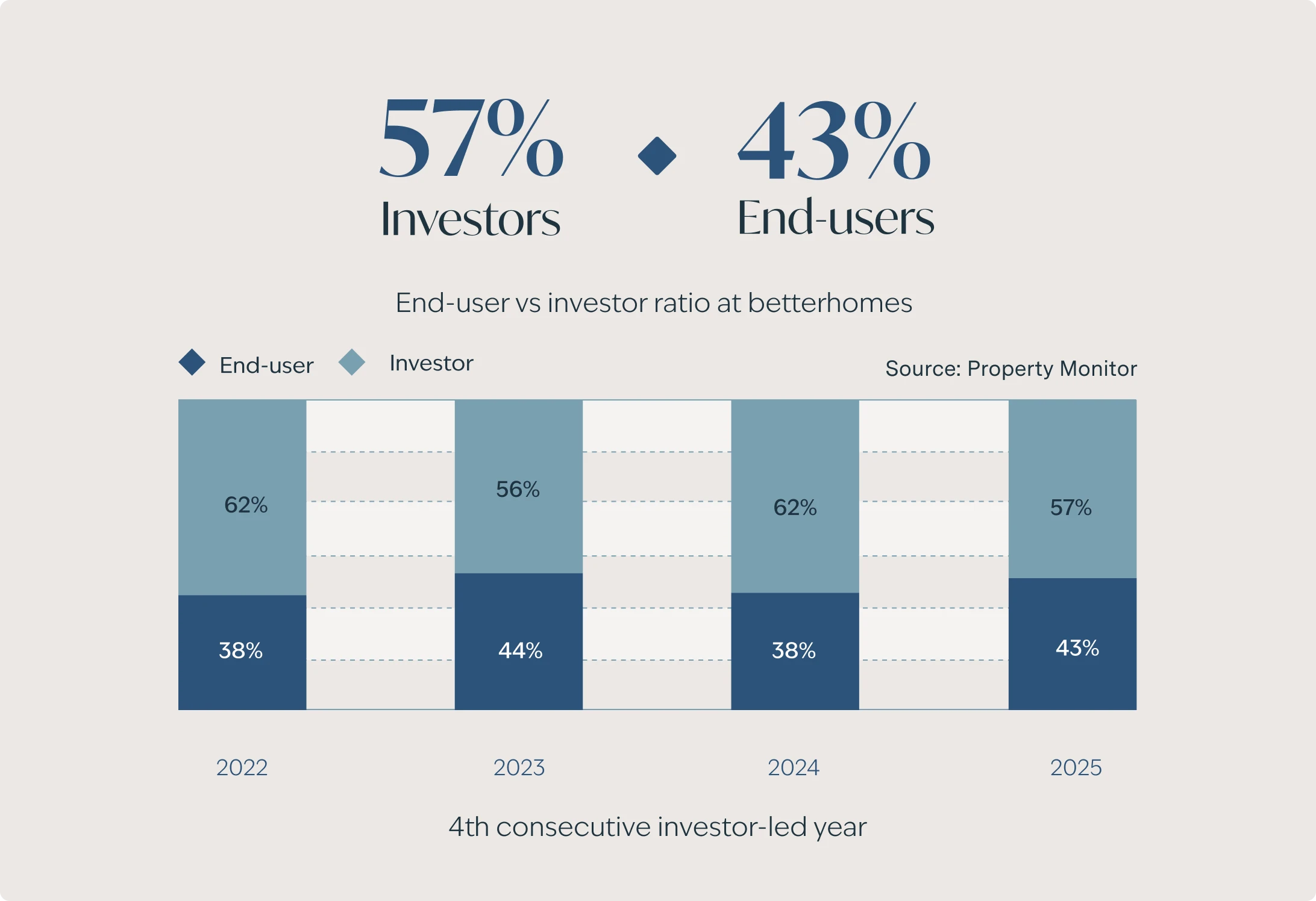
In 2025, 57% of buyers were investors, making it the fourth consecutive investor-led year. But the more interesting shift is on the other side of the equation. End-users now account for 43% of transactions, a share that continues to rise.
This balance tells a healthier story. Investors are still confident enough to commit capital, while residents are increasingly willing to settle long-term. Markets driven by only one of those forces tend to wobble. Dubai currently has both.
What homes sell fastest in Dubai?
Liquidity lives in smaller homes.
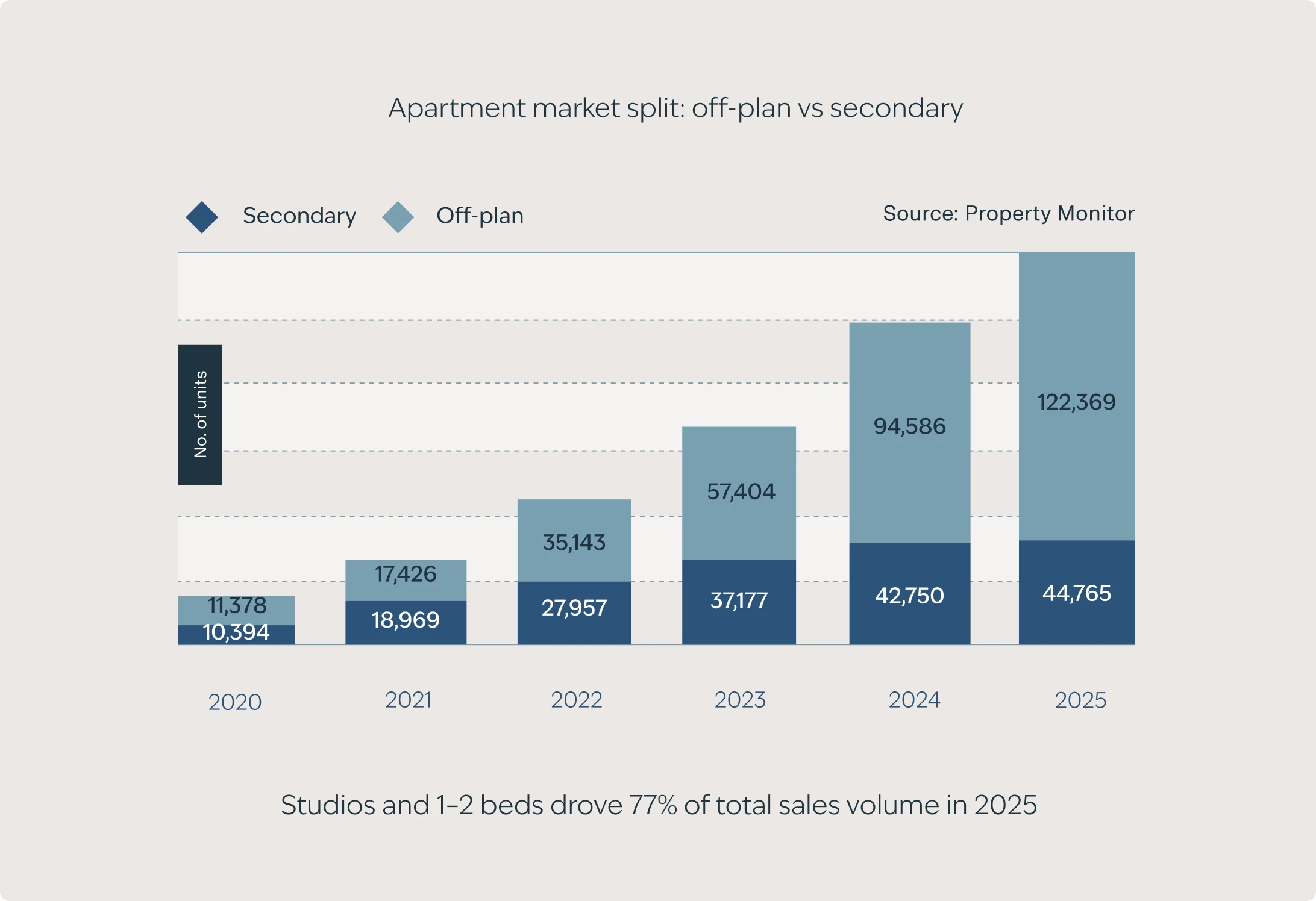
Studios, one-bedroom, and two-bedroom apartments made up 77% of all transactions in 2025. At the same time, 72% of deals sat in the AED 500K to AED 3 million range, reinforcing where demand is most concentrated.
This isn’t a pullback in ambition but a shift toward efficiency. Buyers want homes that rent easily, resell cleanly, and fit realistic budgets. That combination continues to define the fastest-moving stock across the city.
Is off-plan or resale stronger today?
Off-plan remains firmly in front, and the gap hasn’t narrowed.
For the third year running, off-plan led Dubai’s residential market. In 2025, it recorded 132,000 transactions worth AED 286 billion, compared to 71,000 secondary deals totalling AED 262 billion.
What’s notable isn’t just volume. It’s value. Off-plan won by scale, payment flexibility, and buyer confidence in delivery. Secondary stock remains highly active, particularly in established communities, but off-plan continues to set the pace.
Which nationalities are buying property in Dubai?
Dubai’s buyer base is still global, but its demand is increasingly lived-in.
The city’s population surpassed 4 million in 2025, growing 5% for the second year in a row. Alongside that growth came 530,000 rental contracts, a record that signals sustained housing demand rather than short-term movement.
This combination of population expansion and rental activity reinforces a simple truth. People aren’t just buying property in Dubai. They actually live in the homes, not flip them.
Should I buy or rent property in Dubai now?
The decision depends on the time horizon, but buying momentum is a strong signal.
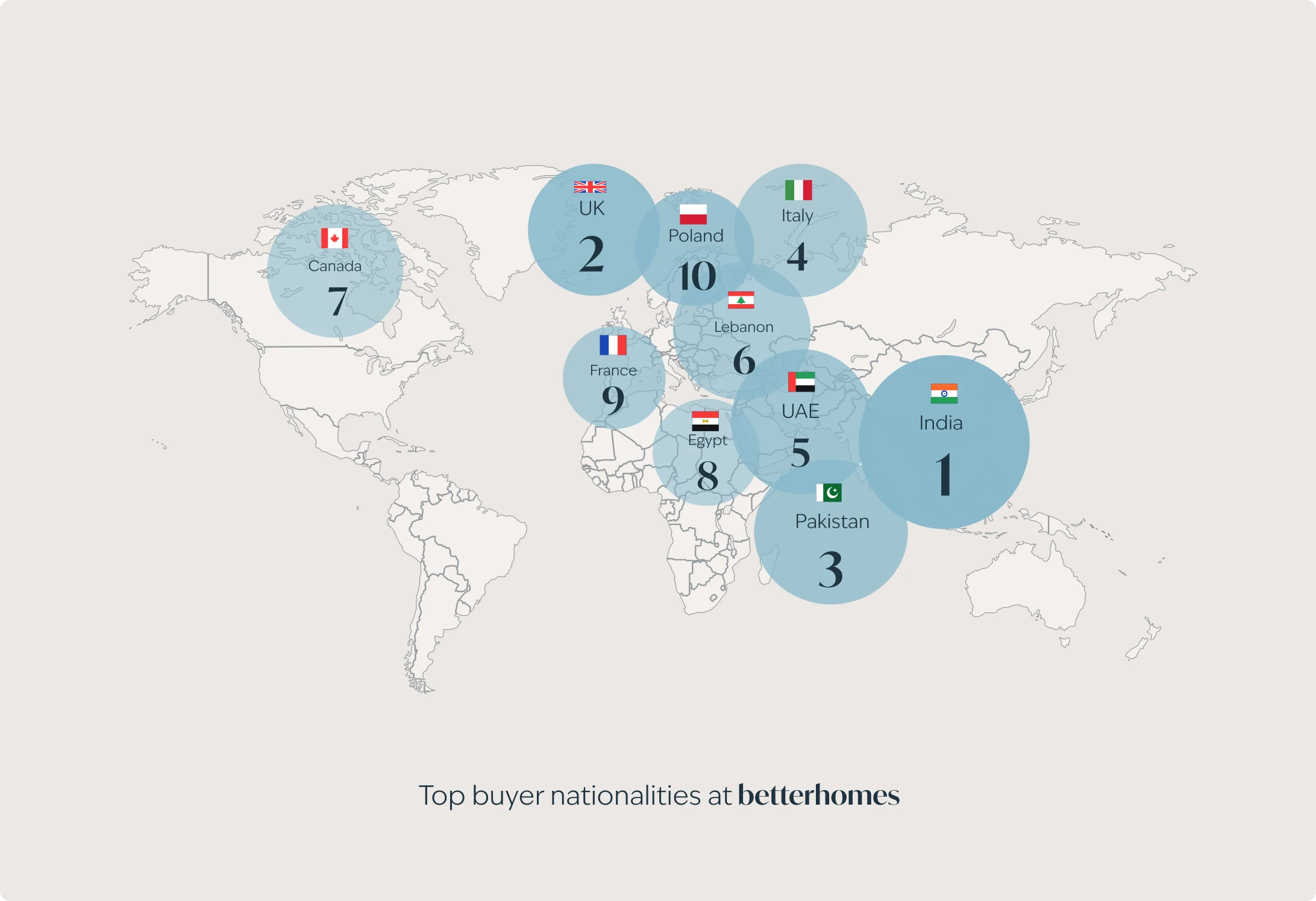
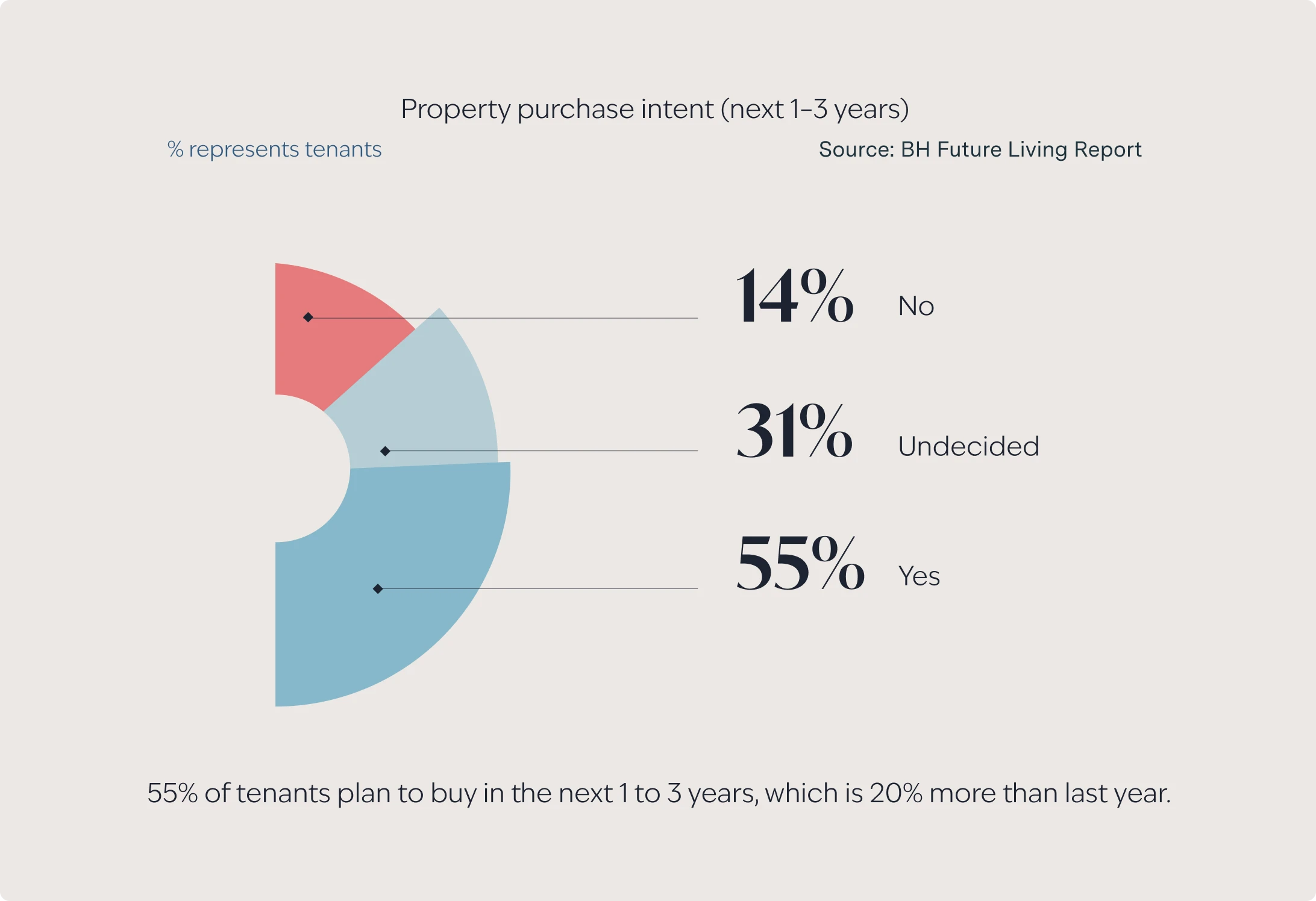
In 2025, the largest buyer groups came from India and the UK, followed closely by Pakistan, Italy, and the UAE. These aren’t speculative inflows chasing volatility. They are long-term buyers responding to rental costs, residency stability, and ownership value.
With rents remaining high and mortgage access improving, more residents are choosing to convert monthly payments into equity. Renting still makes sense for flexibility. Buying increasingly makes sense for permanence.
Are prices still rising in Dubai?
Yes, but the pace has cooled into something more sustainable.
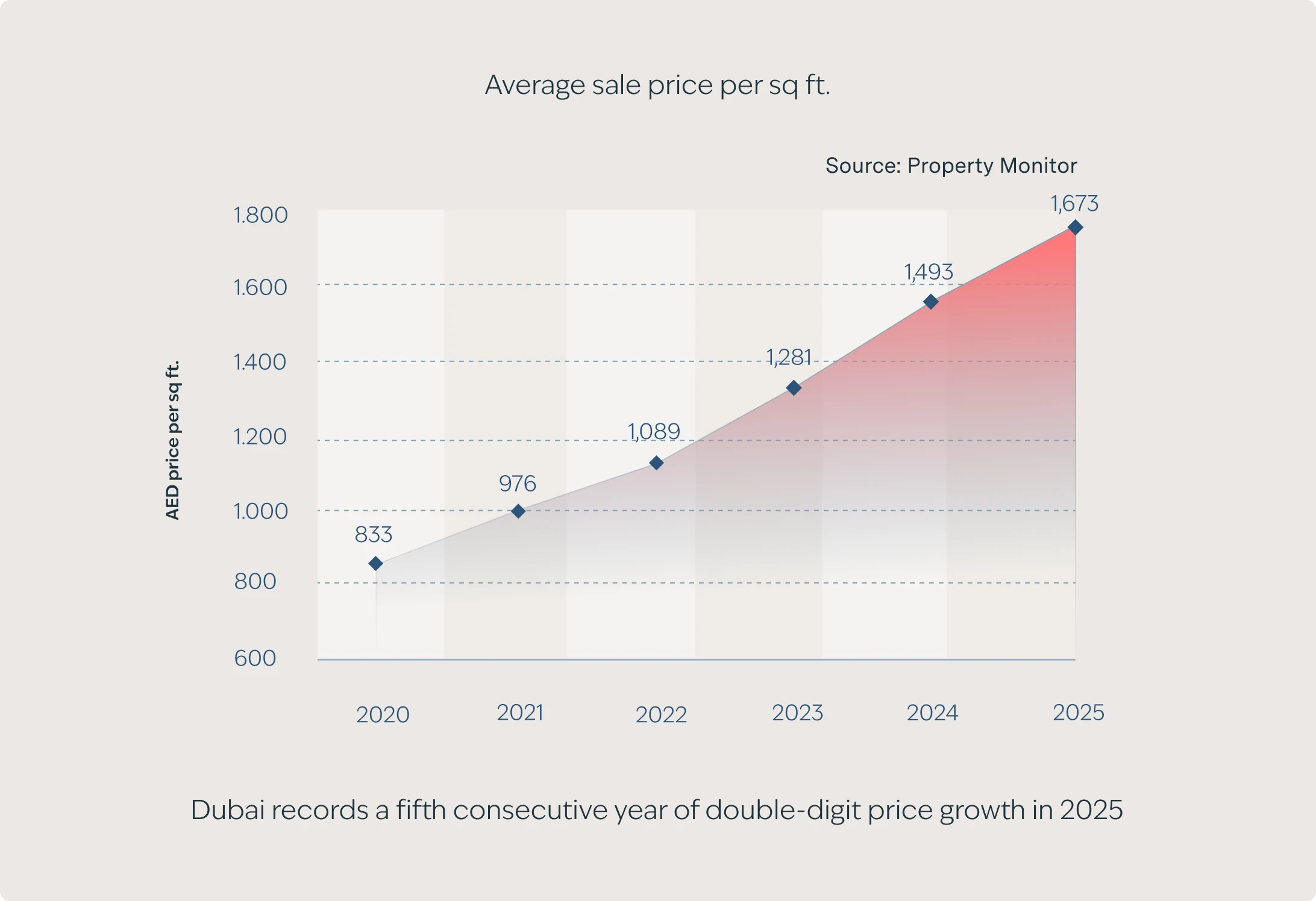
Average sale prices rose 12% year-on-year, reaching AED 1,673 per sq ft in 2025. That’s growth, but not overheating. The market has shifted from sharp acceleration to measured progression.
This moderation is healthy. It allows incomes, rents, and financing to realign, reducing the risk of sharp corrections while preserving capital appreciation.
Which areas have the strongest demand?
Liquidity concentrates in familiar, proven stock.
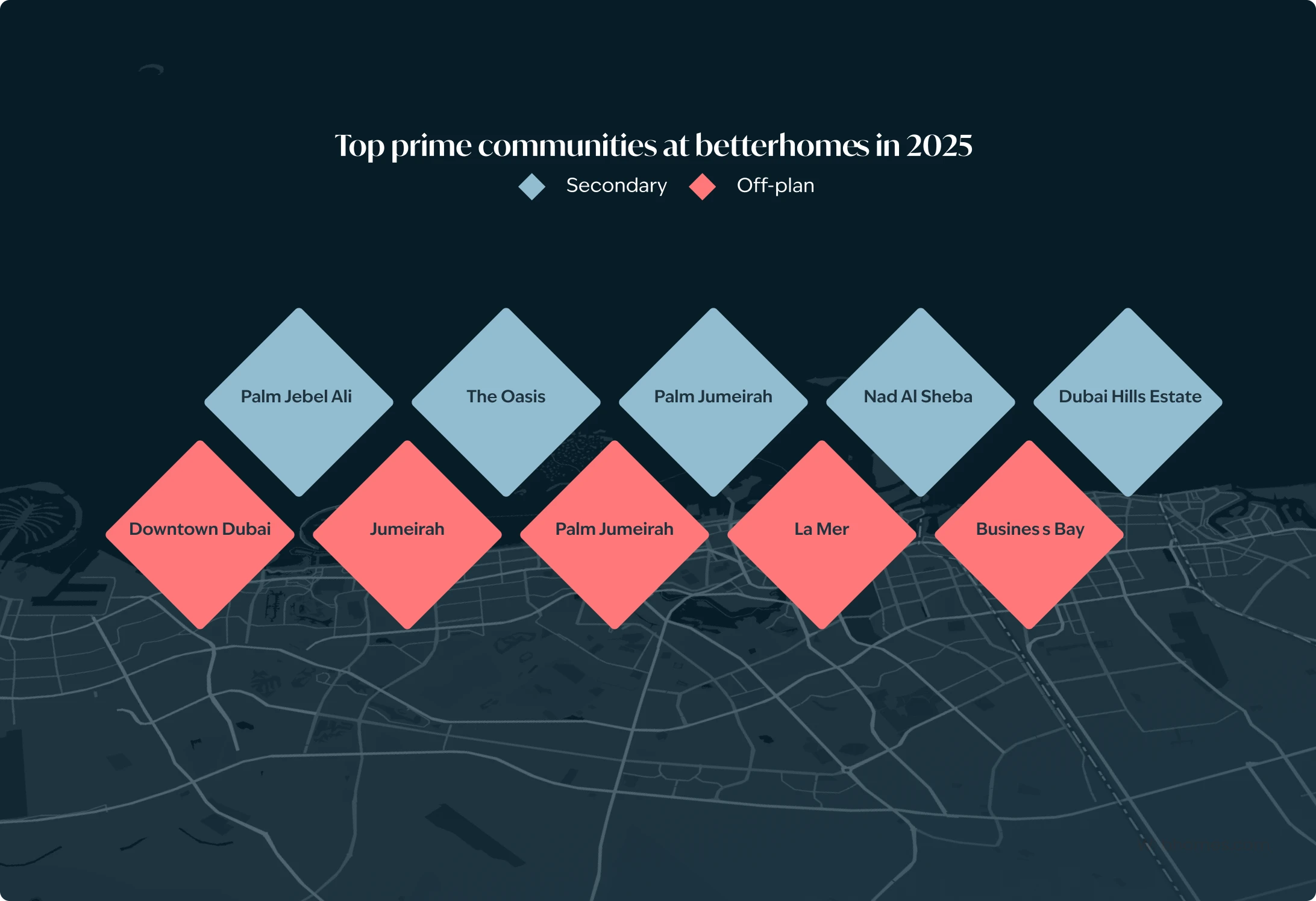
For apartments, Dubai Marina, Jumeirah Lake Towers (JLT), and Jumeirah Village Circle (JVC) continue to attract the highest demand. These areas offer established infrastructure, rental depth, and price diversity.
For villas and townhouses, demand remains strongest in Dubai Hills Estate, Tilal Al Ghaf, and The Springs. These communities balance space, livability, and long-term resale appeal.
Across segments, buyers are prioritising proven neighbourhoods over novelty. Stability is the draw.
Are buyers using cash or mortgages?
Financing has edged ahead.
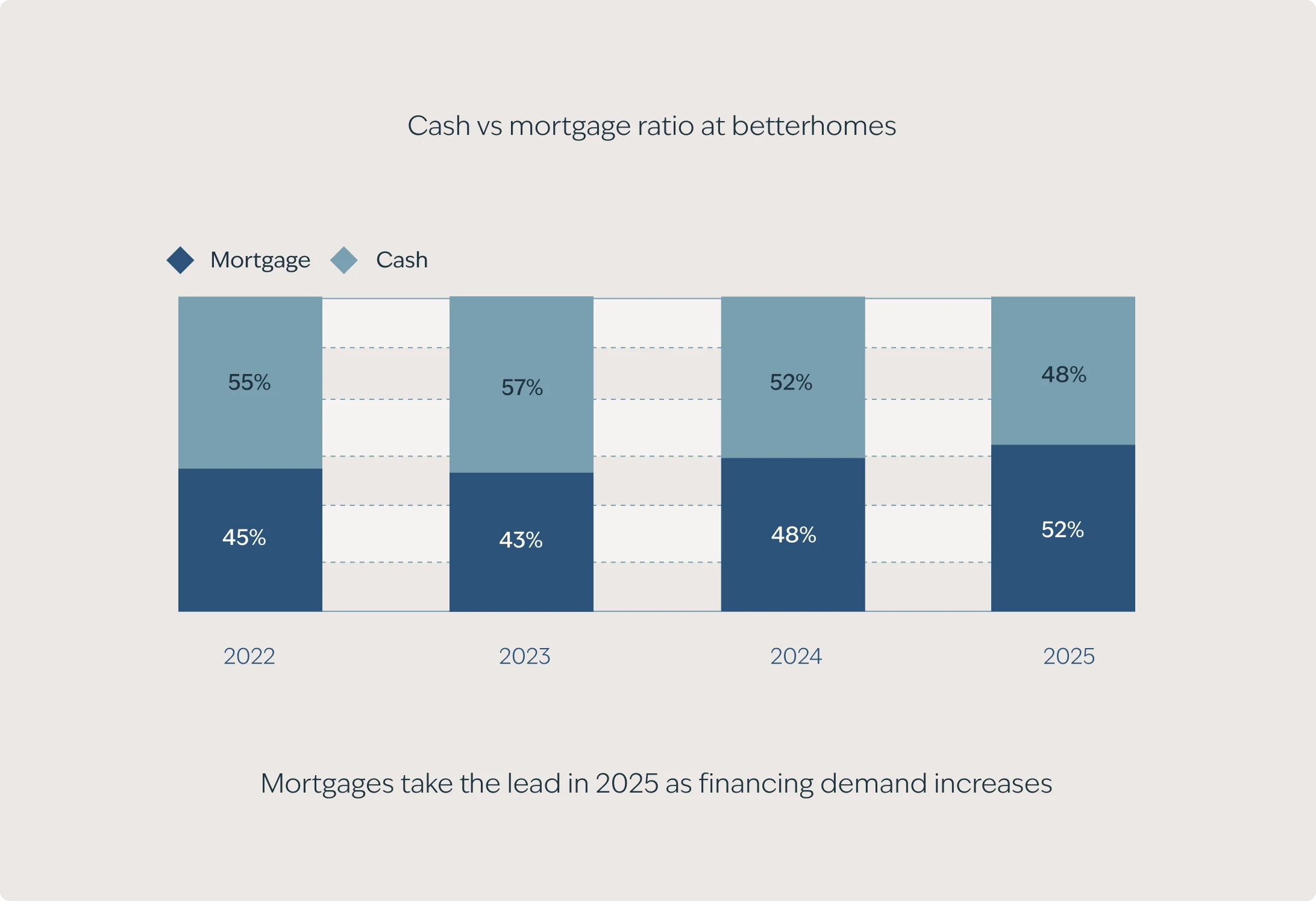
In 2025, 52% of transactions were mortgage-backed, overtaking cash purchases at 48%. This shift reflects growing end-user participation, improved lending confidence, and greater comfort with long-term commitments.
Cash remains important, particularly at the top end, but the return of mortgage dominance signals a maturing market rather than a retreat.
Why do global buyers keep choosing Dubai?
Because the fundamentals continue to line up.
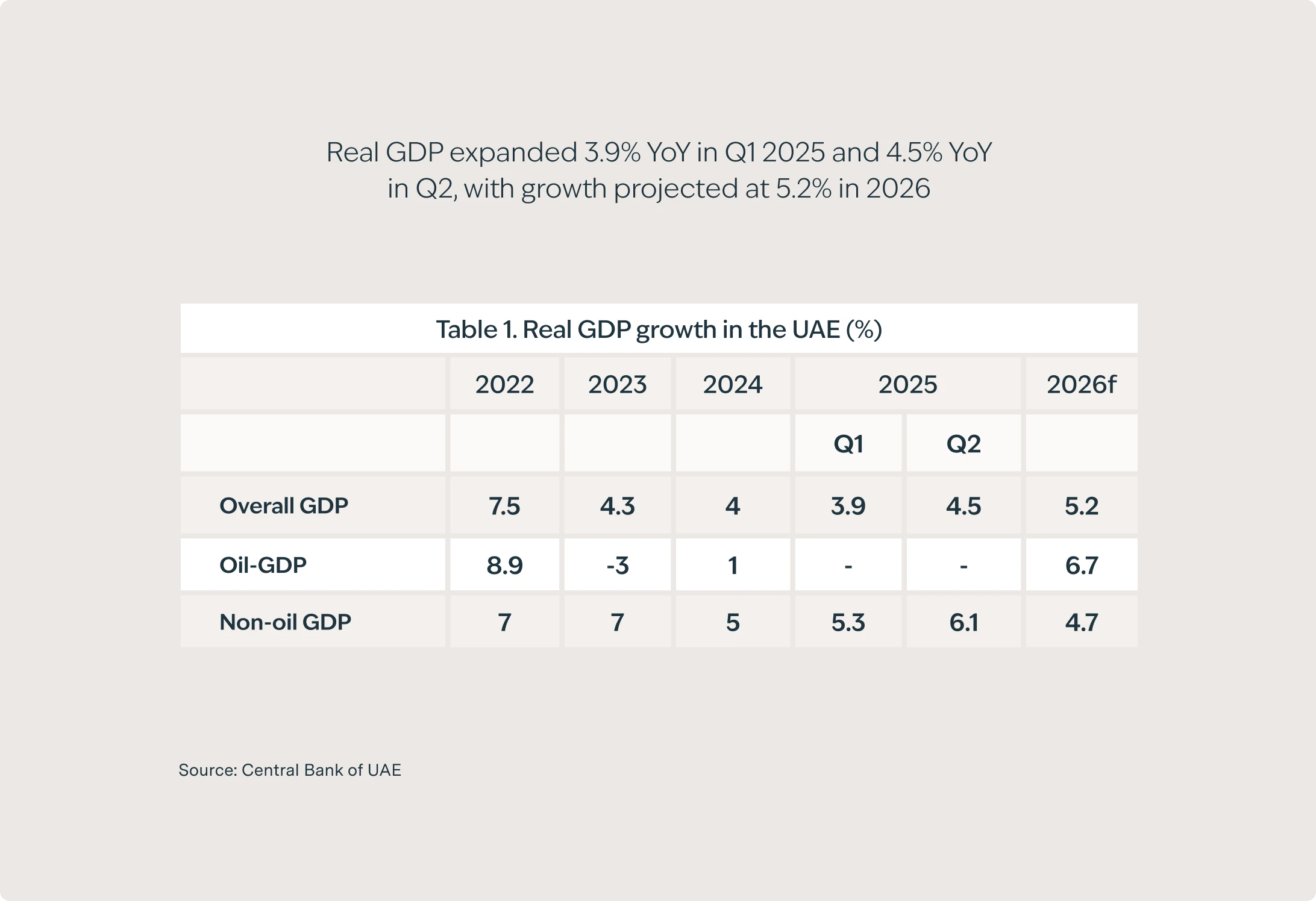
Dubai recorded GDP growth of 3.9% in early 2025, accelerating to 4.5%, driven largely by non-oil sectors. Tourism reached 17.55 million visitors, reinforcing demand across hospitality, rentals, and services. A stable currency and easing rate environment added further confidence.
Markets don’t stay attractive this long by accident. Dubai’s appeal rests on alignment. Economic resilience, population growth, and real estate liquidity are moving together. That alignment is what keeps global capital coming back, year after year.
Where can I find more detailed insights from the full report?
All of that detail only scratches the surface. The full report breaks down which areas led demand, how prices moved across the city, and what the next wave of supply looks like. The PDF below holds the deeper story behind these numbers.
Frequently Asked Questions
Who was buying property in Dubai in 2025, investors or end-users?
+−
Investors led the market, accounting for 57% of purchases, while end-users made up 43%.
Which buyer nationalities were most active in Dubai’s property market?
+−
Buyers from India and the UK remained the most active, followed by Pakistan, Italy, and the UAE.
Were buyers in Dubai using cash or mortgages in 2025?
+−
Mortgages slightly overtook cash, with 52% of transactions mortgage-backed
How did population growth influence Dubai’s housing demand?
+−
Population growth beyond 4 million residents sustained demand across rentals and sales.