
Can non-residents buy property in Dubai?
Buying property in Dubai may seem complicated, but it’s actually easier than you think. Many buyers believe they need a residency visa, a bank account, and a trip to Dubai just to sign papers. But that’s not the case. With a few simple steps, like choosing the right property area, understanding costs, and knowing how mortgages work, you can make the process much smoother. This blog will walk you through who can buy, where you can own, and how to make the process work even from abroad. Let’s get started and make your Dubai property dream a reality.
Quick Summary
Non-residents can buy property in designated freehold areas of Dubai. The process involves agreeing on terms, obtaining developer approval, transferring ownership, and receiving the title deed. Buyers need to pay additional fees, such as a 4% registration fee. Remote buying is possible with a Power of Attorney.
Key Takeaways
- Foreign ownership is limited to specific areas in Dubai, known as freehold zones.
- Buyers don’t need to be in Dubai to purchase property if they have a Power of Attorney.
- The Golden Visa is available for property purchases of AED 2 million or more.
- No personal income tax applies to property owners in Dubai, but government fees do.
- A developer NOC is required for properties involving developers before ownership transfer.
- Minor errors in documents like passport details can delay the property transfer process.
Can Foreigners Buy Property in Dubai without Residency?
Yes, foreign buyers can purchase and own property in Dubai if it is located in a designated freehold area approved for foreign ownership. Dubai Land Department confirms this in its investor guidance and notes that foreign owners can also hold other rights in these areas, such as long-term leases and usufructs. Buying property in Dubai without residency is allowed, so no residency visa is required before purchase, and identity checks can be completed using a valid passport through the Dubai Land Department process for non-resident buyers. Location is the deciding factor, since freehold ownership is linked to these designated areas; the community name matters as much as the price tag.
Freehold Property Dubai for Non-residents
Freehold is the type of ownership most non-residents look for because it gives full ownership with no end date. Dubai Land Department explains that freehold property Dubai for non-residents is available within designated areas, and that this ownership is not limited by time. Below are the well-known freehold areas in Dubai, such as:
- Palm Jumeirah
- Downtown Dubai
- Business Bay
- Dubai Marina
- JLT
- JBR
- Arabian Ranches
- Dubai Sports City
- Dubai Motor City
- International City
A straightforward check that comes first every time is whether the property is inside a designated area, and this can be confirmed through Dubai Land Department services and the checks recommended in the investor guide.
Eligibility Criteria for Buying Property for Non-Residents

Dubai law permits foreign nationals, including non-residents, to buy property, but what they can buy and how they qualify depends on the type of property and title rights as defined by the Dubai Land Department (DLD) and UAE real estate law.
Nationality and Residency
- Applicants of any nationality can buy property in Dubai.
- Residency in the UAE is not required to buy or own property.
Age Requirement
- Buyers must be at least 21 years old to register a property under their name.
Property Location and Ownership Type
Eligibility is strictly tied to the title type and area:
Freehold Property
- A foreigner (resident or non-resident) may buy freehold property only in areas that the Dubai Land Department has designated as freehold zones.
- Freehold means full ownership of the property and the land it occupies indefinitely and the right to sell, lease, or transfer it.
- Freehold ownership must be registered with the DLD to be valid.
Freehold areas include Downtown Dubai, Dubai Marina, Palm Jumeirah, Business Bay, and Dubai Hills Estate.
Leasehold Property
- If a property is not freehold, Dubai law allows buyers (including non-residents) to acquire leasehold rights for a fixed term, up to 99 years.
- A leasehold gives the buyer the right to occupy and use the property for the duration of the lease, but not ownership of the land itself.
- Leasehold contracts must be registered with the DLD or relevant authority to be legally recognised.
Documents and Registration
To complete a legal transaction, a buyer must:
- Present a valid passport (for non-residents).
- Obtain and register the title deed or leasehold instrument with the Dubai Land Department.
- Obtain a No Objection Certificate (NOC) from the developer (common requirement in Dubai property transfers).
The DLD title deed or lease registration is the definitive legal evidence of property rights; unregistered agreements are not legally valid.
Corporate Buyers
- Overseas companies or legal entities can buy property in Dubai if the property is located in a freehold zone or a leasehold area where corporate ownership is permitted under DLD rules.
Visa Eligibility (Clarification)
- Owning property does not automatically grant residency.
- Residency visas based on property investment are available only if the property value meets the qualifying thresholds set by UAE immigration rules, but residency status does not affect basic eligibility to buy.
Steps for a Foreign Buyer to Purchase a Ready Property in Dubai

Step 1: Agree on the deal
The first step in purchasing property in Dubai is to agree on the price and terms with the seller. Once both parties agree, the sale agreement is signed, and a deposit is paid. It’s crucial to check the property’s condition and verify all necessary documents before signing anything. The Dubai Land Department also recommends ensuring that the documents are legitimate and complete before proceeding with the next steps.
Step 2: Get the developer NOC
If the property is part of a development, a No-Objection Certificate (NOC) from the developer is required. This certificate confirms that there are no issues with the property, including any outstanding service charges or maintenance fees. The developer will also verify the unit’s status before the transfer can proceed. Without this NOC, the transfer cannot move forward.
Step 3: Transfer at a Trustee Centre
Once the NOC is obtained, the next step is to complete the ownership transfer at a Real Estate Trustee Centre. This is where the buyer and the seller submit the required documents for verification. All official fees are paid at this stage.
Step 4: Receive the title deed
After the ownership transfer is successfully completed, the title deed will be issued electronically. The Dubai Land Department provides this service, and there are associated fees for the title deed certificate. Once issued, the buyer officially becomes the property owner, and the title deed serves as legal proof of ownership.
Quick tip
It’s vital to ensure that your passport details and name spelling match exactly on all documents. Even minor errors can cause delays during the transfer process, so double-check everything to avoid any issues down the line.
Taxes and Fees a Foreign Buyer Pays
Foreign buyers in Dubai don’t face additional taxes just for being non-residents. Personal income tax is not charged in Dubai, so if a private owner decides to sell their home later, they won’t face capital gains tax, unlike in some other countries.
However, while no extra taxes are levied on foreign buyers, there are still essential fees to consider during the purchase. The Dubai Land Department charges a 4% registration fee based on the property's sale price. For properties valued at AED 500,000 or less, the fee is AED 2,100. For properties priced at AED 500,000 or more, the fee increases to AED 4,200. Additionally, buyers are responsible for the title deed issuance fees, as well as other minor charges such as the knowledge fee and innovation fee, which apply to many government services. These fees are due at the time of purchase, so it’s important to factor them into your investment budget.
When it comes to VAT, things can get confusing. For commercial property sales and leases, they are usually taxed at 5%. However, residential properties are generally exempt, and if the property is new (within three years of completion), it’s treated as zero-rated (0%) under VAT rules. Regular residential resales are not subject to the 5% VAT, but commercial property deals will be.
For buyers using a mortgage, there’s an additional mortgage registration fee of 0.25% of the mortgage value, as well as related title deed charges. This adds an extra layer of cost on top of the property transfer fees.
A common question for property investors is about rental income. For many overseas owners, rental income is considered personal income, not business income. According to the Federal Tax Authority, rental income earned by individuals is not subject to corporate tax. Corporate tax only applies if a person’s business activities generate more than AED 1,000,000 in turnover in a year. Importantly, rental income is not counted in this turnover calculation, so it is exempt from corporate tax. This makes owning rental property in Dubai a highly tax-efficient investment for non-resident investors.
Can You Buy Property in Dubai from Abroad?
Yes, you can buy property in Dubai without travelling. To do this, you will need to use a legal power of attorney, which allows someone you trust to handle the property transfer for you at the trustee centre. The power of attorney must be clear and specific. If the document is too vague or broad, banks, developers, or trustee centres may not accept it. So, it’s best to make sure the details match exactly what your representative needs to do.
While you can buy property remotely, some visa-related steps may still require a visit to Dubai. For example, if you’re applying for a Golden Visa, you’ll need to complete some in-country steps, even though other parts of the process can be done online. While the purchase can be handled from abroad, it’s worth noting that some steps may still require a visit.
Golden Visa Links to Property Ownership
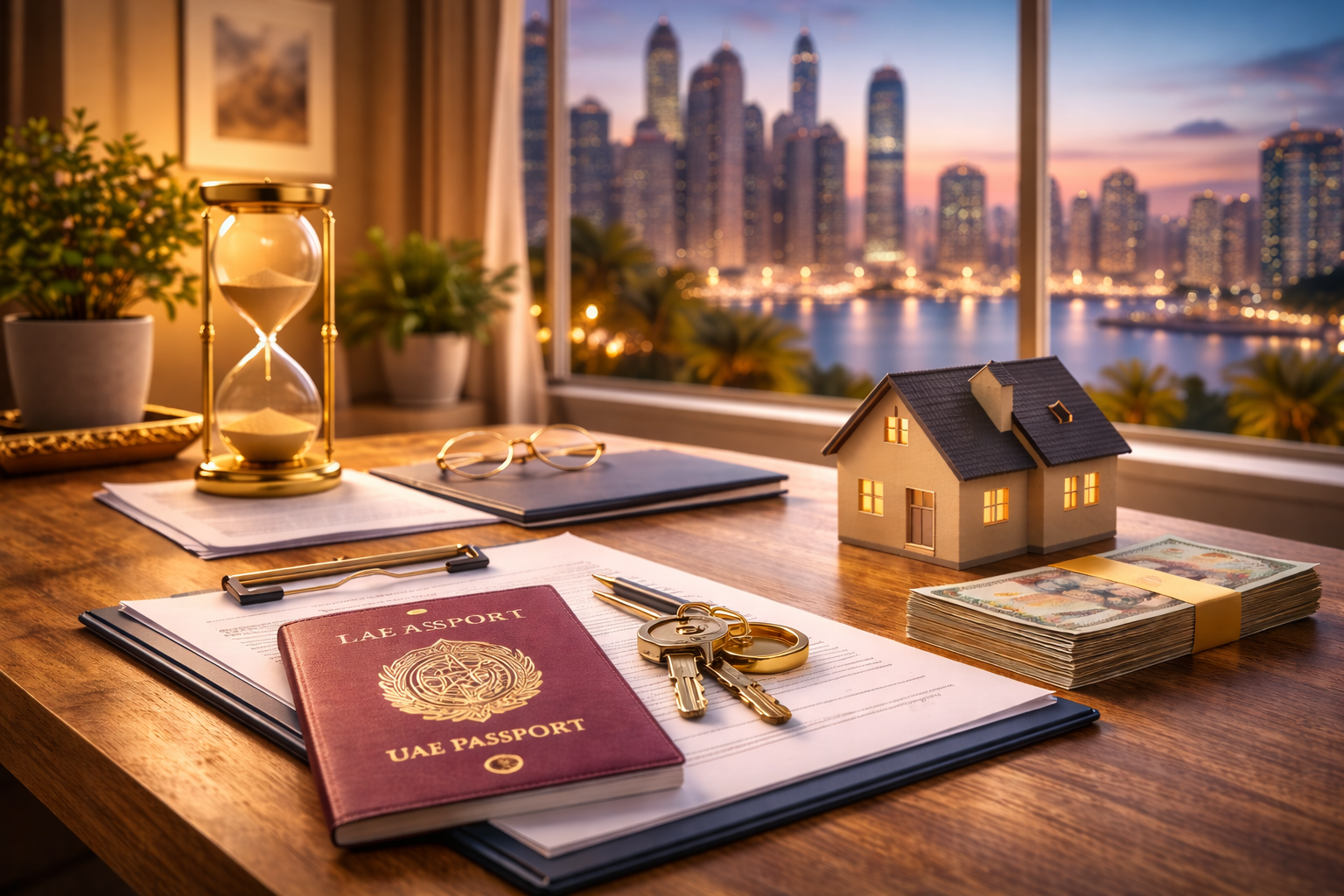
Many buyers ask about residency once they learn foreigner property ownership Dubai is allowed without holding residency first. Dubai offers a 10-year Golden Visa that is available when the property’s purchase value is AED 2 million or more at the time of purchase. A mortgage can still qualify, but DLD requires a bank no-objection letter plus proof showing the paid amount and the remaining balance (including evidence that AED 2 million has been paid). DLD lists the total fee for the main applicant as AED 9,884.75, which includes a medical examination. One key rule is easy to miss, which is that the applicant must be inside the UAE so that online services can start the process, but it is not fully remote from start to finish.
Common Mistakes Non-Residents Make
Non-resident buyers rarely encounter issues under Dubai’s ownership rules. Problems usually appear when a legal or process detail is missed early and only shows up later during transfer, mortgage approval, or visa planning. Clear rules for buying property in Dubai help avoid last-minute surprises. Below are the most common mistakes.
- Buying outside a designated area, only to learn too late that foreign freehold ownership is permitted only in approved zones
- Trusting claims on an off-plan unit and skipping escrow checks, even though escrow protection is part of the official framework
- Budgeting only for the down payment and missing the 4% DLD fee and trustee registrar fees, which can be a high extra cost
- Assuming a mortgage will cover most of the price, then finding out non-resident limits are lower, such as up to 50% with Mashreq and up to 60% with HSBC.
- Treating the Golden Visa as automatic, even though it has conditions, a minimum value requirement, and an in-country step in the official process
A clean purchase plan looks boring on paper, yet it saves real time and real money. Area check, escrow check, fee budget, mortgage limit, and visa rules. Those five checks remove most surprises.
Conclusion
A good Dubai purchase as a non-resident comes down to control, not luck. The right location and title type keep you from wasting time on the wrong unit, and a clear budget keeps the deal from stalling right at the finish line. Mortgage planning deserves early attention too, since overseas lending limits can change the deposit plan and the paperwork list in one go. Buying from abroad stays realistic when the power of attorney is written for the exact steps, not left vague. Golden Visa expectations also remain grounded when treated as a separate goal with its own conditions, rather than a promise attached to every purchase. Keep those parts in order, and the outcome is simple with fewer delays, fewer surprises, and a deal that feels organised from start to finish, which is the whole point.
Deposit ready, still not sure what to buy or where to buy it? Contact us, and we will shortlist eligible freehold options, negotiate the price, and handle the buying steps for you.
Frequently Asked Questions
Can non-residents buy property in Dubai?
+−
Yes. Non-residents can buy and own property in Dubai, provided the property is located in an area approved for foreign freehold ownership.
Can I buy property in Dubai on a tourist visa?
+−
Tourist status does not block a purchase. Dubai Land Department transfer services accept non-resident buyers using a passport, and list “Tourist” as a residency status option on the title transfer service.
Can you own 100% property in Dubai as a foreigner?
+−
Yes, freehold ownership gives full ownership rights within designated freehold areas so that a foreign buyer can hold full title there.
Can I get a mortgage in Dubai as a foreign buyer?
+−
Yes. Non-resident foreign buyers can get a Dubai mortgage, but the loan is capped at about 50% of the property’s value, so a 50% deposit (plus fees) is required.
Do I get residency if I buy property in Dubai?
+−
Yes, residency is possible if you meet the eligibility/value requirements and apply through DLD investor residence services, or via the 10-year Golden Visa route for a qualifying property value.
What is the 99-year visa in Dubai?
+−
No 99-year visa exists. A 99-year figure refers to leasehold, a property right that can run up to 99 years in some cases, not a residency permit.
Can foreigners buy property in Jumeirah?
+−
Jumeirah is a broad label. Foreigners can buy in freehold pockets like Jumeirah Beach Residence, while many parts of Jumeirah are not sold as foreign freehold. The exact community and title type need to be checked first.
Can I buy property in Dubai without flying in?
+−
Yes, paperwork can be handled through an official power of attorney for the title transfer process, as shown on the Dubai Land Department’s title transfer service requirements.