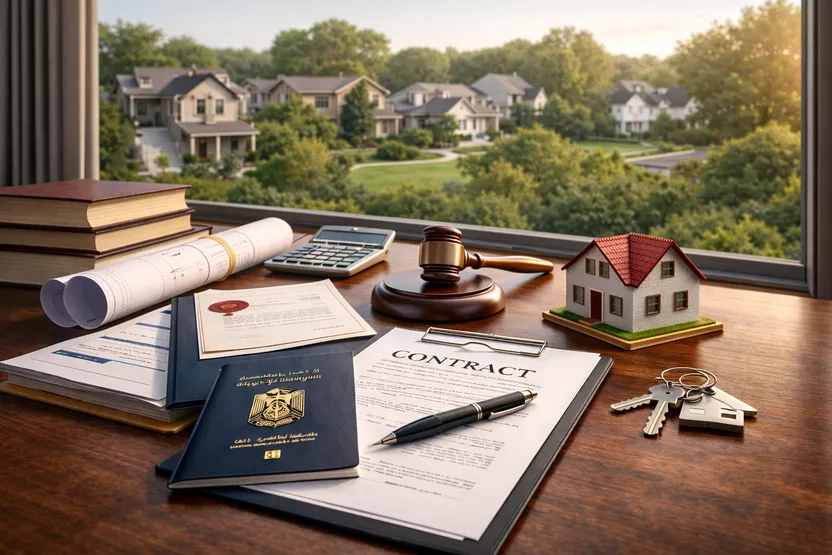
Legal process & documents required to buy property in Dubai
A home in Dubai can look perfect on paper, yet the real story is in the legal steps behind it. Contracts, title deeds, and government records decide who owns what, not just a handshake or a transfer receipt. Getting those details right keeps a purchase smooth and prevents problems later. This guide explains how property ownership works in Dubai, what documents are required, and how the system is set up to protect everyone involved.
Summary
Every property sale in Dubai goes through an official legal procedure before ownership is confirmed. The Dubai Land Department records every sale, issues title deeds, and controls all ownership transfers. Buyers sign Form F, clear developer and mortgage dues, and complete the transfer at a DLD trustee office. Once the new title deed is issued, the buyer becomes the legal owner.
Who Oversees Property Transactions in Dubai?
Every real estate transaction in Dubai is under the supervision of DLD, the one central authority. The role of the Dubai Land Department is to register, regulate, and protect all property ownership in the emirate. No apartment, villa, or plot can be legally owned unless it is recorded inside the Land Department’s system.
The Dubai Land Department keeps a central database of all properties, owners, developers, mortgages, and transfers. It also licenses brokers and trustee offices to ensure only approved parties handle sales. When people talk about title deeds, registration fees, or official transfers, they refer to actions carried out through DLD.
DLD also oversees the Real Estate Regulatory Agency (RERA). RERA sets the rules for brokers, developers, escrow accounts, and advertising. Together, these bodies form the backbone of Dubai property laws for buyers.
Laws for Property Buyers in Dubai

Dubai’s property market operates under a clear legal framework that protects buyers. The main law you should know about is Law No. 7 of 2006. It ensures that:
- All property ownership must be registered with DLD
- Title deeds are legally recognised
- Only licensed developers and brokers can sell property
These laws prevent multiple ownership claims and stop unregistered sales.
Where You Can Buy Property in Dubai?
If you're a foreign national or non-resident, you can buy property outright (complete ownership of the land and building) in specific "freehold" zones. Places like Dubai Marina, Downtown Dubai, and Palm Jumeirah fall into this category. Buying in one of these zones gives full ownership of the home and the land it sits on, with no time limit.
Outside these areas, you might be able to get a "leasehold" agreement, which lets you use the property for up to 99 years, but you won't own the actual land it sits on. That gives the right to use the home for an extended period, though the land itself belongs to the original owner.
Developer Rules and Escrow Protection
All developers selling off-plan property must be registered with RERA and must use escrow accounts for each project. Buyer payments are deposited into these accounts and released as construction progresses. It gives buyers real peace of mind by preventing funds from being misused.
Inheritance and Property Ownership
Dubai does not automatically apply foreign inheritance laws to property. If a foreign owner dies without a registered will, local inheritance laws may apply.
Many property owners register a will so their home passes to the people they choose without legal delays.
Step-by-Step Legal Process of Buying Property in Dubai
The property-buying process in Dubai begins once a buyer and seller agree on the price and terms. A verbal agreement means nothing on its own, so the general procedure, regulated by the DLD, involves the following steps:
Agreement of Terms
The buyer and seller settle on the price, payment plan, and handover date with the help of a RERA-registered agent, who ensures the details comply with local rules.
Signing the MOU (Form F)
Both sides sign the sales contract, known locally as Form F or the MOU. This happens through a DLD-approved trustee or broker. At this stage, the buyer normally pays a 10% deposit to show commitment and lock in the deal.
After the MOU is signed, the conveyancing process begins.
What Happens During the Conveyancing Stage?
The conveyancing process in Dubai refers to the legal and administrative checks done before ownership transfers.
The seller must request a No Objection Certificate from the developer. This document confirms that service charges have been paid and that there are no violations in the unit. Without it, the property cannot be transferred.
If the seller has a mortgage, the bank issues a liability letter showing the outstanding loan amount. That loan must be settled before the title can move to a new owner.
At the same time, brokers and trustee offices verify that the property has no legal blocks, disputes, or court orders. All of this information comes from the Dubai Land Department’s system.
Transfer of Ownership
Once the NOC is ready, either party or their authorised representative visits a Dubai Land Department trustee office to complete the transfer. The buyer brings a manager’s cheque for the remaining balance, the seller hands over the title deed, and the Land Department updates its system. A new title deed is then issued in the buyer’s name to make the ownership official.
Digital copies are sent through the Dubai REST app, and printed copies can also be collected.
Legal Requirements & Costs
Eligibility: Buyers must be at least 21 years old at the time of purchasing property in Dubai. A guardian (parent/legal representative) must sign contracts on behalf of a minor (under 18) who owns property, and court approval may be required for the sale or mortgage of the property.
Financing: Home loans are available to residents and non-residents, though terms vary by bank. Most expat buyers need to put down 20-25% of the property price, with the rest covered by a mortgage, if approved.
Fees:
DLD Transfer Fee: 4% of the property purchase price.
Registration Trustee Fee: AED 2,100 to AED 4,200 (for properties above or below AED 500,000).
Agency Fee: 2% of the purchase price.
Developer NOC fees: AED 500 - 5,000
What Documents a Buyer Must Provide

Before the transfer can happen, a few key documents need to be in place.
- Copy of a valid passport with at least six months of validity remaining.
- Emirates ID (UAE citizens) for identity verification at the Dubai Land Department.
- MOU or Form F ( for resale homes) or Sales and Purchase Agreement (for off-plan purchases).
- Bank statements from the last three to six months.
- Manager’s cheque showing the ability to complete the purchase.
- No Objection Certificate from the developer.
- Power of Attorney if the buyer cannot attend.
Additional Documents if Applicable
- Mortgage pre-approval letter if financed through a UAE bank.
- Salary certificate (salaried buyers) or a trade licence and audited financial statements (self-employed buyers).
- Proof of address (recent utility bill or bank statement showing the buyer’s current address)
- Oqood certificate for off-plan property
Why Dubai’s Legal Framework Matters
The legal process for buying property in Dubai took shape as the city opened itself to people from all over the world who wanted to live, invest, or put down roots here. Clear laws, government registers, and close checks on developers give buyers a level of comfort that many other markets still struggle to offer.
People who understand the property buying process in Dubai walk into a deal feeling more at ease. Fewer unknowns mean fewer surprises, so attention stays on the home instead of getting stuck in paperwork.
No system runs without flaws, though Dubai’s setup makes ownership easy to track, confirm, and pass on to family when the time comes.
Conclusion
A property deal in Dubai does not depend only on price or location. It depends on how well the legal steps are handled along the way. Clear ownership records, registered contracts, and government oversight turn a big financial decision into something far more secure. Once the process is understood, the focus shifts from worry to choosing a home or an investment that fits the next stage of life. Understanding the process makes the whole deal feel steadier, right up to the moment the keys are handed over.
Buying property in Dubai works best when the legal side is handled correctly from day one. Our team helps buyers review documents, verify developers, and navigate the transfer process without guesswork.
If you are thinking about a home or an investment, contact us to speak with a specialist who knows how to protect your interests at every stage.
Frequently Asked Questions
Can non-residents buy property in Dubai?
+−
Yes, non-residents can buy property in Dubai only in government-approved freehold areas such as Dubai Marina, Downtown Dubai, and Palm Jumeirah.
What is Form F in Dubai real estate?
+−
Form F is the official Memorandum of Understanding that records the agreed sale terms between the buyer and seller for resale properties.
When does ownership legally transfer in Dubai?
+−
Ownership transfers only when the Dubai Land Department issues a new title deed in the buyer’s name.
What is a title deed in Dubai?
+−
A title deed is the official government document that proves legal ownership of a property in Dubai.
Can property ownership lead to a residence visa?
+−
Yes, property valued at at least AED 750,000 can qualify for a two-year visa, and property valued at AED 2 million or more can be eligible for a ten-year Golden Visa.
What is Oqood for off-plan properties?
+−
Oqood is an interim registration issued by the Dubai Land Department for off-plan property ownership.
Can a mortgaged property be sold in Dubai?
+−
A property with a mortgage can be sold once the outstanding loan is cleared during the transfer process.
Is property ownership recorded digitally in Dubai?
+−
The Dubai Land Department records ownership digitally and issues electronic title deeds through its official system.