Greece real estate insight: market overview, hotspots & buying process
Greece is getting more attention from Dubai investors who want something different from the usual global cities. The interest is practical and grounded, not driven by hype. People buy property here to use it, return to it over time, or keep it as part of a long-term plan, with less focus on quick exits and more on real ownership.
What makes Greece stand out is that the market supports different goals simultaneously. Cities play an active role in long-term rentals, coastal areas attract seasonal demand, and prices leave room for gradual growth. These factors shape where investors focus and how returns take form over time.
Let’s walk through how the Greek property market looks today, where returns are strongest, how ownership works, and what the luxury segment really looks like on the ground.
About Greece
Greece sits between Europe, Asia, and Africa, a position that has shaped its culture, trade, and travel patterns for centuries. The country has more than 200 inhabited islands and a long coastline that influences everyday life, from food and transport to tourism and local traditions. Athens is the capital, where government offices, major companies, and key transport routes are based.
Population and Daily Life
Greece has a population of just over 10 million people, with the majority living in urban areas such as Athens, Thessaloniki, Patras, and Heraklion. Daily life places strong importance on family, social interaction, and routine. People spend a lot of time outside the home, meeting friends at cafés, gathering for meals, or walking through neighbourhood streets in the evenings.
Language, Currency, and Time Zone
Greek is the official language used in government, education, and media. English is widely spoken in cities, tourist areas, and among younger generations, so visitors and foreign residents don't encounter communication gaps in the country. Greece uses the euro for all transactions. The government follows Central European Time and adjusts for daylight saving during summer.
Travel and Connectivity
Ferries, domestic flights, and an improving road network support movement within Greece. Islands are well connected to the mainland, and larger cities have international airports linking Greece with Europe and nearby regions.
Healthcare and Education
Healthcare in Greece is available through public and private facilities. Public hospitals operate across the country and provide most everyday and emergency care, with larger, more specialised hospitals based in major cities. Private clinics and hospitals are common in Athens and Thessaloniki, where many doctors have trained or worked abroad and also practise in the public system.
Education follows a similar structure. Greece has public universities and technical institutes spread across the country, alongside private colleges in larger cities. International schools are limited in number and are primarily based in Athens, with a smaller presence in other major urban areas.
Climate and Lifestyle
Summers are warm and dry, and winters are mild in most parts of the country, especially along the coast. This climate encourages outdoor routines and a slower pace in daily life.
The Current Real Estate Landscape in Greece
When you look at where Greece stands right now, the property market has been active. In the first quarter of 2025, average property prices in urban areas rose about 6.2% year-on-year, following more substantial gains in 2023 and 2024. According to the Bank of Greece, apartment prices increased about 6.8% in the first part of 2025 compared with the same period last year. When you break it down by age, newer apartments (less than 5 years old) saw prices climb about 8.0%, while older apartments (more than 5 years old) saw prices rise about 6.0% in the same period.
If you look specifically at Athens, average property prices were roughly €2,450-€2,580 per square metre in early 2025, with variations depending on neighbourhood and property condition. Property prices in Thessaloniki have climbed noticeably, with some reports noting around €2,558 per square metre, up over 10% year-on-year in early 2025. In certain parts of the southern suburbs, such as Vouliagmeni, prices trail closer to €4,000+ per square metre.
On the rental side, average gross yields across the country sit near 4.4% to 5% as of late 2025. That means if someone rents out a property at ordinary local rates, the income before costs usually works out to a mid-single-digit percentage of the property’s value. In Athens specifically, yields for apartments and houses range around 4.5% to 6%, depending on location and size.
This trend reflects how demand is spread across different buyer groups. Local families and Greeks returning from abroad continue to buy homes, driven by everyday housing needs and lifestyle choices. There’s also interest from international buyers, not just from programmes like the Golden Visa but from people looking for second homes and long-term stays. Overall, analysts expect price growth to remain positive but more gradual in 2026.
Hotspots & High ROI Areas
Athens
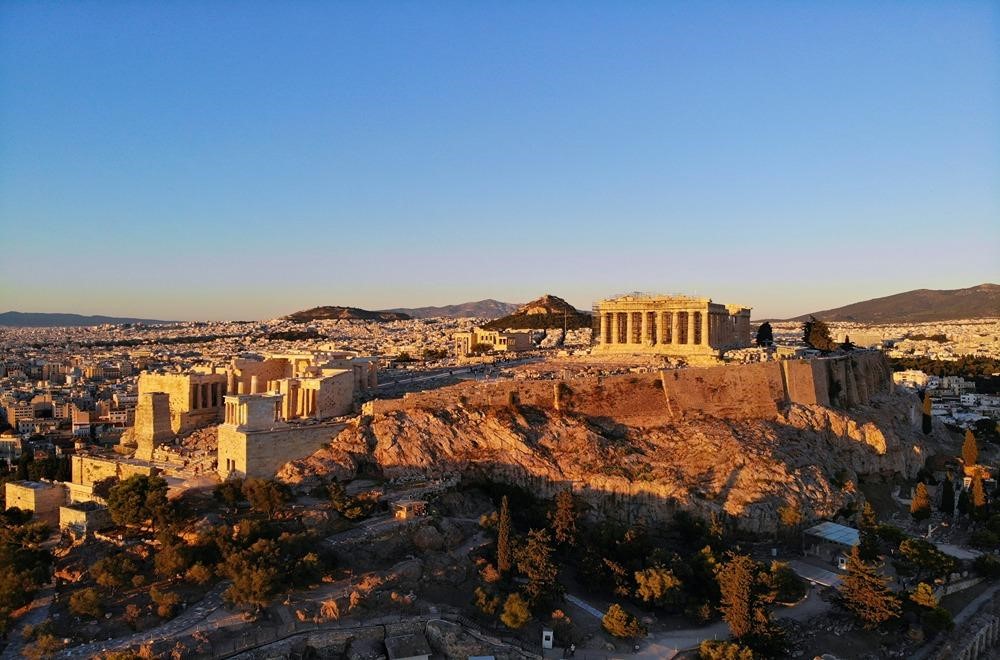
Athens is the capital and the centre of everyday life in Greece. People move here for work, education, and long-term plans, which keep the city active throughout the year. Offices, universities, hospitals, and public transport shape daily routines, and that steady movement supports housing demand across many neighbourhoods.
Most buyers focus on apartments rather than villas. Older buildings in established areas attract interest because of their locations, especially when they sit close to metro stations or main roads. Renovated units rent faster, but even well-kept older apartments see consistent interest because people value access and convenience.
To put the numbers into context, the table below shows how prices in Athens vary by area and property type.
Thessaloniki
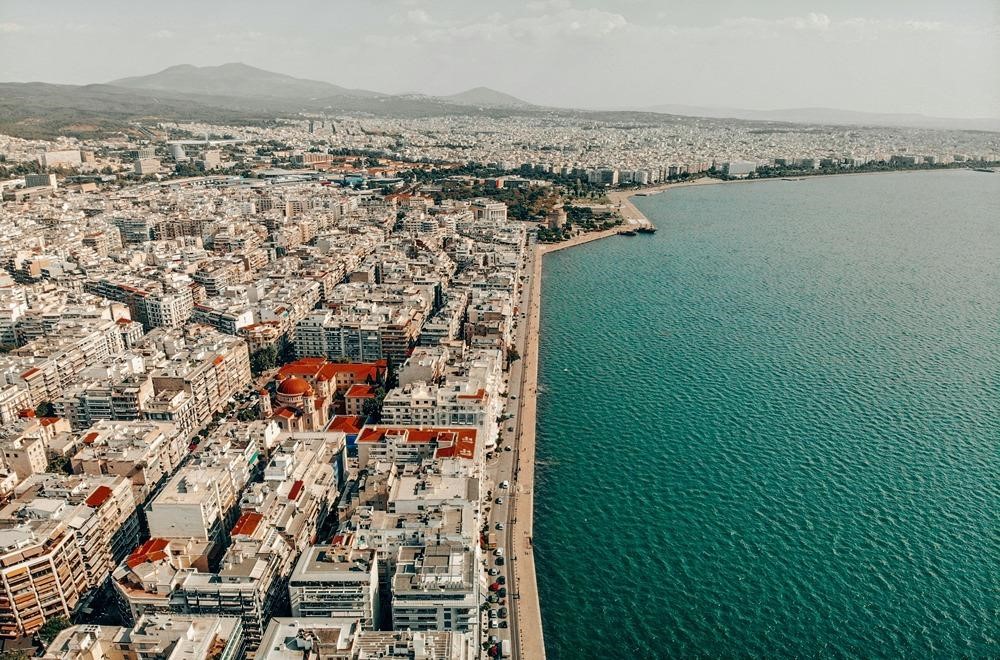
Thessaloniki is Greece’s second-largest city and plays an important role in education, trade, and day-to-day business across northern Greece. Universities, offices, and port activity keep people moving in and out of the city throughout the year. Most housing demand here comes from locals, students, and young professionals. Apartments close to universities, the city centre, and main transport routes attract the most interest. Smaller units are popular with single tenants and shared living arrangements, which helps keep occupancy stable.
Thessaloniki suits buyers who want a city that functions year-round, with steady demand and more approachable entry prices. It offers a quieter alternative to Athens without losing the fundamentals that support long-term rental activity.
The table below outlines current sale prices in Thessaloniki by property type, with rental demand and expected return ranges shown for context.
Crete – Heraklion
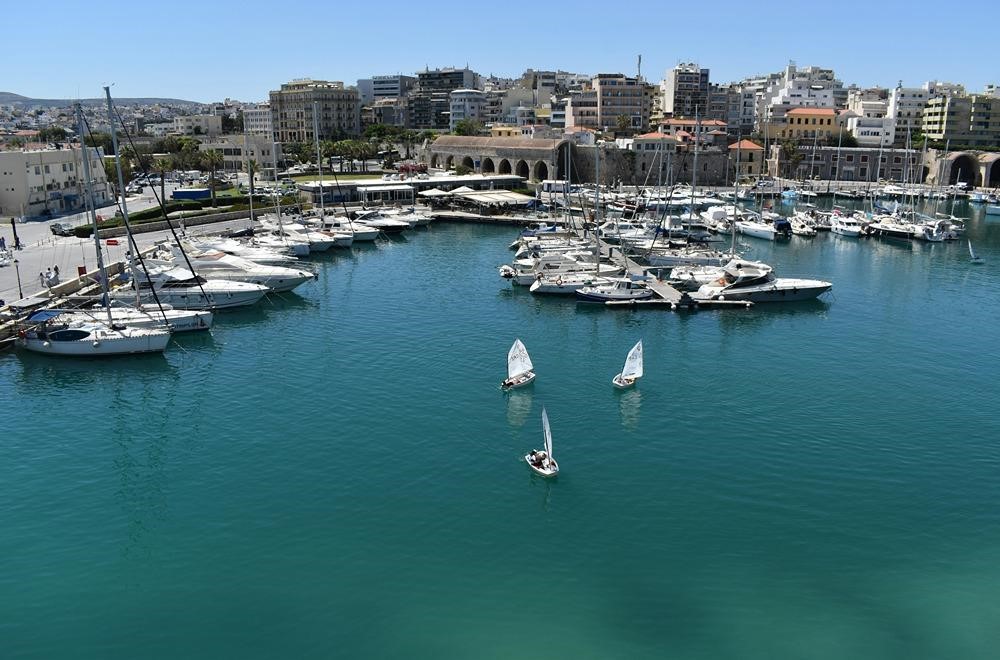
Heraklion is the largest city on the island of Crete and plays a central role in education, healthcare, and local employment. Universities, hospitals, offices, and port activity keep the city active throughout the year. Housing demand in Heraklion comes mainly from residents who live and work on the island, as well as from students and professionals moving in from other parts of Greece. Apartments near the city centre and close to everyday services attract the most interest. Smaller units are easier to rent, though family-sized apartments also see steady demand in well-connected neighbourhoods.
The table below shows current apartment prices in Heraklion with figures converted into AED per square foot for easier comparison.
Crete – Chania
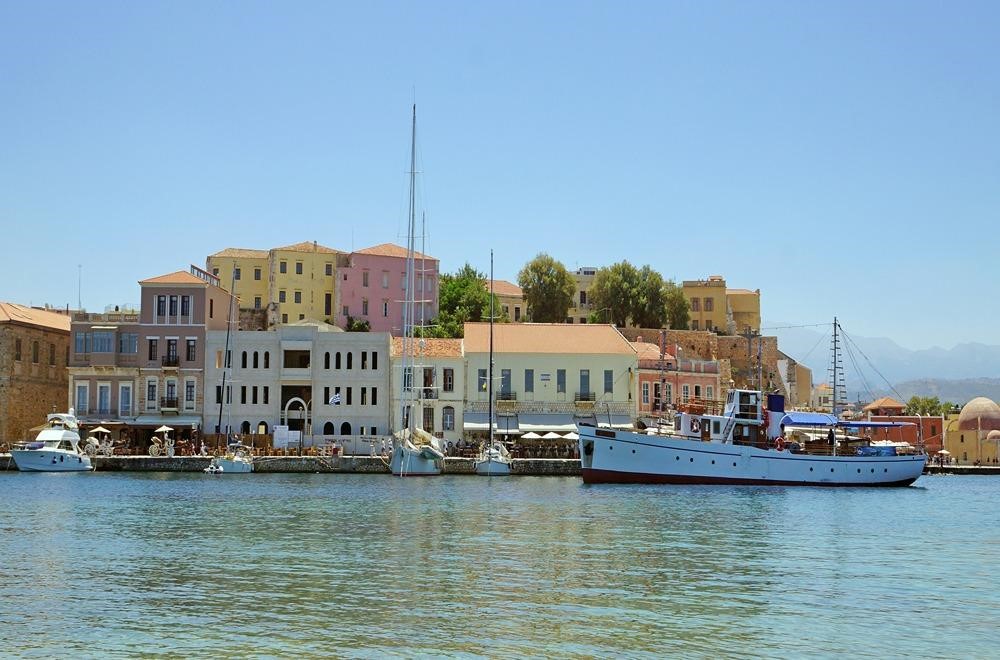
Chania is one of the most established cities on Crete and has a substantial day-to-day population alongside regular visitor activity. The old town, the harbour area, and nearby residential districts shape how people live and move around the city. Work, education, and local services keep the town active beyond the tourist season.
Housing demand here comes from long-term residents, professionals, and tenants linked to education and local businesses. Apartments closer to the centre and near the coast attract the most attention, especially those that are well-maintained and easy to access. Smaller units rent faster, though larger apartments also perform well in neighbourhoods used by local families.
The table below outlines current price levels in Chania.
Mykonos
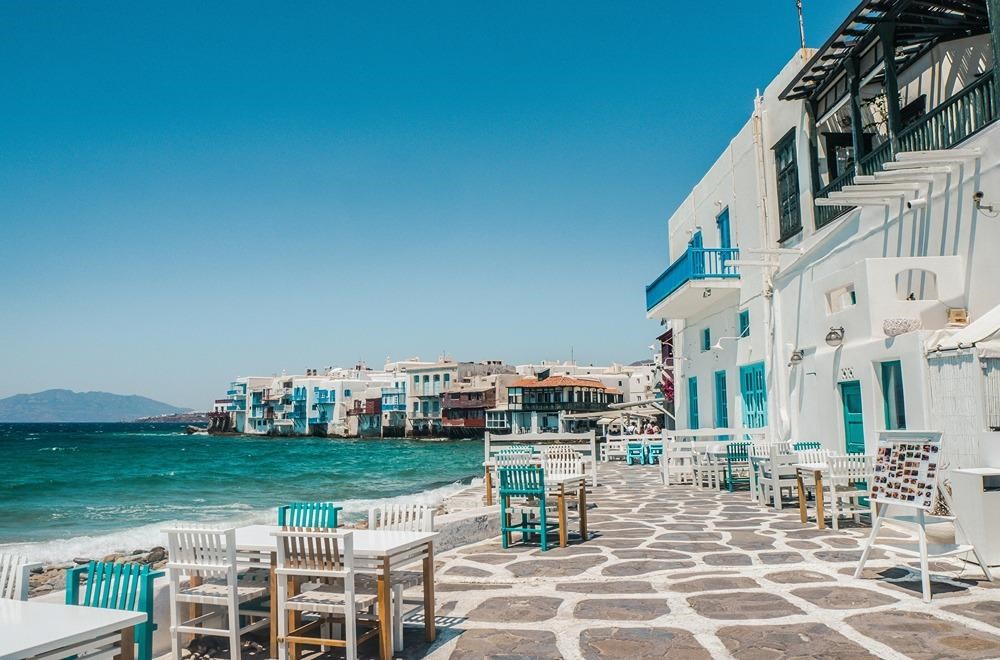
Mykonos sits at the premium end of the Greek market and attracts a very specific type of buyer. Interest here is driven by international travel, limited land availability, and the island’s strong reputation as a holiday destination. Homes are usually bought for personal use, short-term rentals, or a mix of both.
Housing demand peaks during the warmer months, when visitors arrive in large numbers and short-term rentals dominate the market. Villas and well-located apartments with coastal views or open views receive the most attention. Smaller apartments also perform well during peak season, mainly because of lower entry prices and easier booking.
Rental income here is seasonal, with strong performance concentrated into a few months of the year. Short-term rates during peak periods can be high, which helps offset quieter months. Mykonos suits buyers who are comfortable with a seasonal market and higher entry prices. The focus here is lifestyle, limited supply, and peak-season income rather than year-round tenancy.
The table below shows average current prices in Mykonos by property type.
Santorini
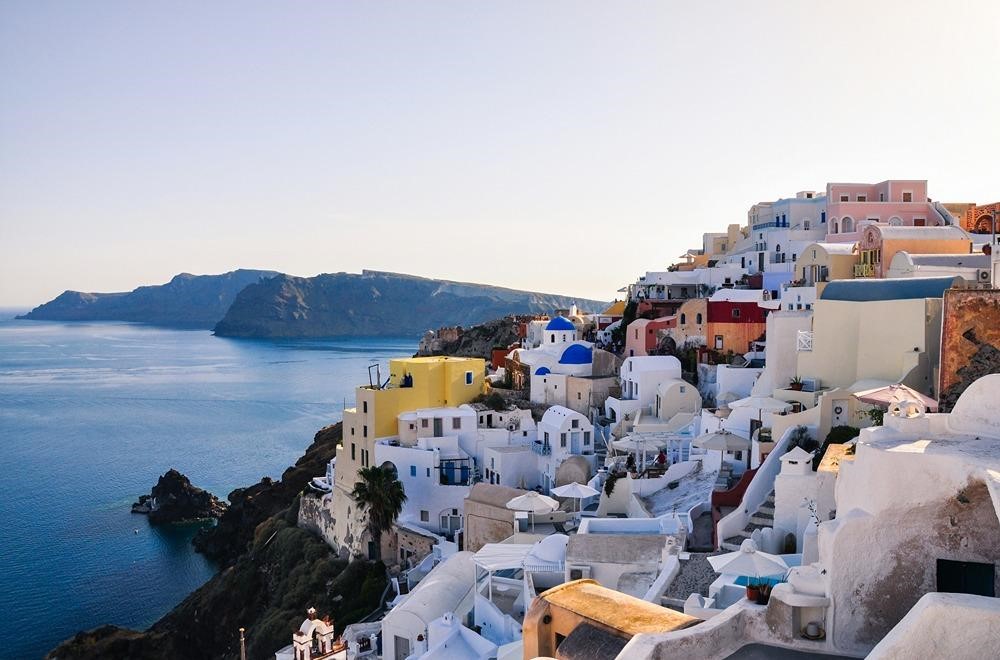
Santorini is known for its dramatic setting and limited space, which shapes how property is bought and used on the island. Homes here are tied to short stays, personal use, or both. Demand rises during the warmer months, when visitors book short stays close to the caldera, the old villages, and coastal areas. Properties with open views, terraces, or traditional layouts attract the most attention. Smaller units are easier to manage and book, though distinctive homes also perform well due to limited supply.
The table below outlines current property prices in Santorini by unit type.
Property Ownership Process for Locals and Foreigners
Property ownership in Greece is open to locals and foreign buyers. Residency is not required to purchase real estate, and ownership rights are protected under Greek law. Buyers hold full title to the property, with no requirement for a local partner or sponsor. This applies to apartments, houses, and land, subject to standard legal checks.
Get a Greek Tax Number
Every buyer must obtain a Greek tax number, known as an AFM. This number is needed for all official transactions, including signing contracts, paying taxes, and registering ownership. The process is administrative and handled through the tax office, sometimes with help from a lawyer or authorised representative.
Open a Local Bank Account
A Greek bank account is used to complete the purchase and manage ongoing expenses. Payments such as the purchase price, taxes, utility bills, and service charges pass through this account. Banks require identification documents, proof of current address (bank statements, bills, etc.), copies of your tax returns, and a tax number (AFM) before opening an account.
Legal Due Diligence
Legal checks form a key part of the buying process. A local lawyer reviews the property’s ownership history, land registry records, zoning status, and building permits. This step confirms that the seller has a clear title and that there are no legal issues associated with the property. Only after these checks are completed does the transaction move forward.
Signing and Notary Transfer
Once the legal reviews are complete, the final contract is signed in the presence of a notary. The notary oversees the official transfer of ownership and registers the deed with the land registry. At this stage, the buyer becomes the legal owner of the property under Greek law.
Taxes and Buying Costs
In addition to the purchase price, buyers should plan for extra costs totalling 8% to 10%. These include transfer tax, legal fees, notary fees, and registration charges. The exact amount depends on property value and location, but these costs are paid at the time of the transaction and are standard across the market.
Financing Options for Foreign Buyers
Greek banks offer mortgages to non-resident buyers, though lending terms are more conservative. Loan-to-value ratios are lower than for residents, and banks assess income stability, employment history, and credit records. Many buyers choose partial financing and fund the rest through cash to keep approvals simpler.
Ownership After Purchase
Once the property is registered, ownership is fully secured. It is not linked to visa status or length of stay in the country. Owners are responsible for annual property taxes and any income tax related to rental earnings, which are handled through the local tax system.
Greece Golden Visa Programme
Greece offers a residency-by-investment route through its Golden Visa Programme, which has been in place since 2013. The programme allows non-EU nationals to obtain long-term residency by investing in real estate or other approved assets in the country. It has attracted buyers from Europe, the Middle East, and Asia who want a legal base in the EU without relocating full-time.
What the Golden Visa Offers
The Greek Golden Visa grants five-year residency, which can be renewed as long as the investment is maintained. The permit allows visa-free travel across the Schengen Area, so it is useful for people who move frequently for business or family reasons. There is no minimum stay requirement, so holders do not need to live in Greece to maintain residency.
Minimum Investment Thresholds
The required investment depends on the property location.
In high-demand areas, like central and southern Athens, Thessaloniki, Mykonos, Santorini, and parts of popular islands, the minimum real estate investment is €800,000.
In most other parts of mainland Greece and on smaller islands, the minimum investment drops to €400,000.
There is also a €250,000 option, but it applies only to specific cases, such as converting a commercial or industrial building to residential use or restoring a protected historic property. In both cases, the conversion or restoration must be completed to qualify for the permit.
The investment must be made in a single property, not split across multiple units.
Who Can Apply
Applicants must be non-EU nationals, over 18 years old, with a clean criminal record and valid health insurance. Family members can be included in the application. This covers a spouse and children, and in some cases, dependent parents.
Application Process
The process begins after the property purchase is completed. Once the investment is registered, the applicant submits biometric data and documentation to the authorities. Temporary residency is issued first, followed by the full permit once approvals are complete. Processing times vary, but many applicants receive their licenses within a few months.
Costs of Buying a Property in Greece
Here’s a breakdown of the usual costs buyers should expect when purchasing property in Greece.
Major Developments and Trends Shaping the Market
Several changes are shaping how Greece’s property market works today, and most of them come from long-term planning. Infrastructure investment has picked up, especially around Athens, major ports, and coastal areas. Transport upgrades, improvements around Piraeus, and marina developments have made certain locations easier to access and more practical for everyday use. Urban renewal projects in older neighbourhoods have also improved the quality of housing stock, which matters to buyers thinking beyond short stays.
Rules linked to residency-based property investment have also shifted. Higher minimum investment levels in popular areas such as central Athens, Thessaloniki, and well-known islands have changed buyer behaviour. Instead of focusing only on the most visible locations, many buyers now look at secondary cities, mainland towns, and less crowded islands. This has spread demand across a broader range of regions.
Another noticeable change is how buyers view older properties. Renovated homes with updated layouts, better energy efficiency, and modern fittings attract stronger interest. Properties that need major work still sell, but buyers approach them more carefully and factor in renovation time and costs. This has encouraged refurbishment activity, particularly in cities with older buildings, and has slowly improved overall housing quality.
All of this has changed how buyers approach Greece. Interest is no longer limited to a few well-known areas. More regions now attract attention based on access, condition, and how well a property fits everyday use.
Conclusion
People buy homes in Greece for practical reasons. Some want to live close to the sea, others base themselves in cities for work, and many return to their homes year after year. Prices move at a steady pace, rental demand comes from more than one type of tenant, and the ownership process becomes easy to follow once the steps are clear. However, Greece does not lend itself to rushed decisions or short-term thinking. Location matters, and so does understanding how people actually live in each area. A city apartment in Athens serves a very different purpose than a coastal home used part of the year. Both can work when expectations are realistic and aligned with returns.
If you want to explore Greece further, our team can help you compare locations, prices, and returns based on how you plan to use the property. Contact us to talk it through.
Frequently Asked Questions
Can foreigners buy property in Greece without residency?
+−
Yes. Foreign nationals can buy property in Greece without holding residency or a visa. Full ownership rights are granted upon registration of the purchase, and ownership is not tied to immigration status.
Which areas in Greece offer the highest rental returns?
+−
Cities like Athens and Thessaloniki offer stable long-term rental demand, while islands such as Mykonos, Santorini, and parts of Crete generate higher seasonal income. Returns depend on location, property type, and rental strategy.
Is financing available for foreign buyers in Greece?
+−
Yes. Greek banks offer mortgages to non-resident buyers, though loan-to-value ratios are lower than for residents. Banks assess income stability, credit history, and the purpose of the purchase.
Is Athens better than the islands for long-term rentals?
+−
Athens generally supports long-term rentals better due to year-round demand from professionals and students. Island markets rely more on seasonal demand, which can affect income consistency outside peak travel months.
Can non-EU buyers rent out property in Greece?
+−
Yes. Non-EU buyers can legally rent out property in Greece. Rental income must be declared, and owners must follow registration and tax requirements, especially for short-term rentals.