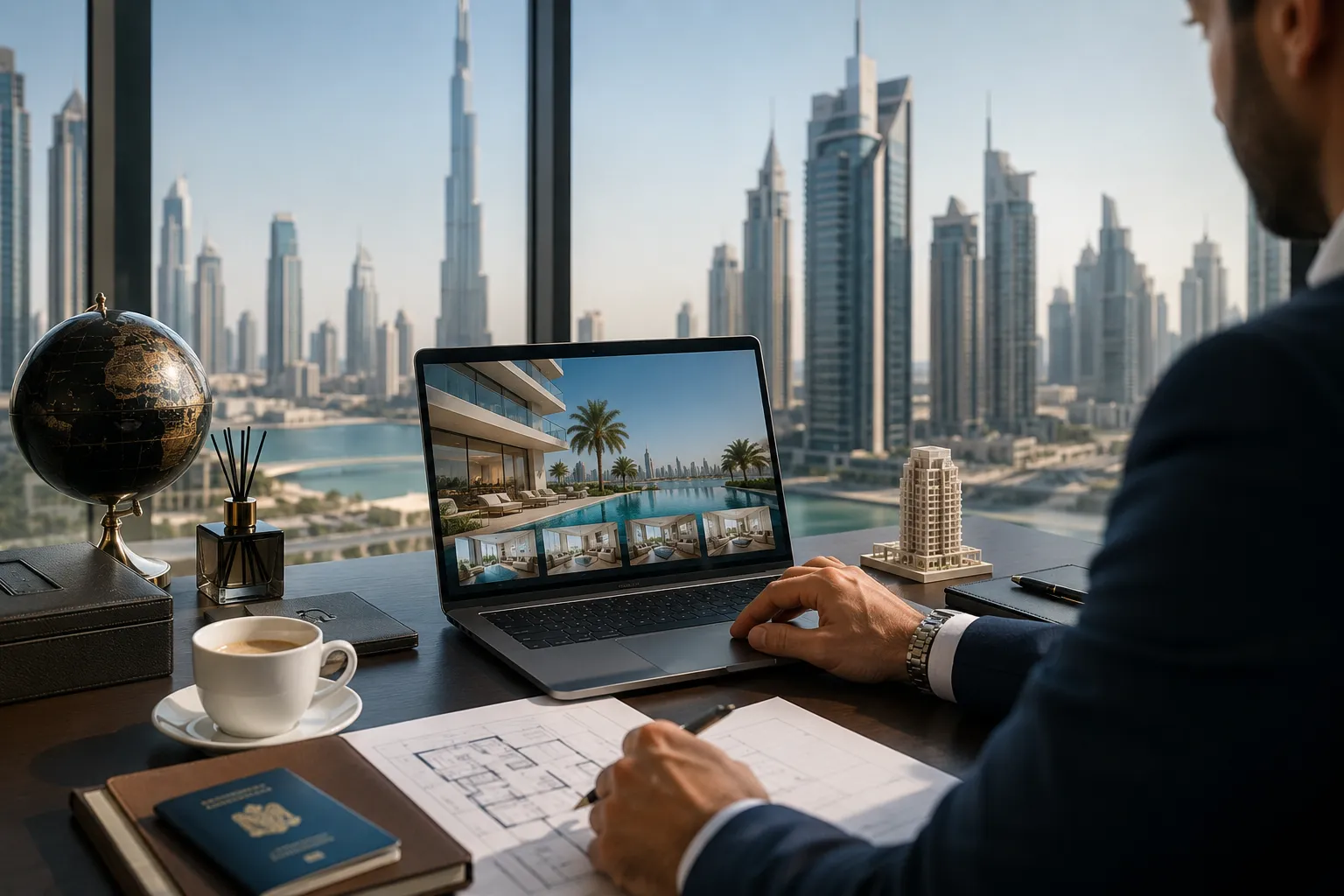
What global and regional factors will shape Dubai property prices in 2026? key risks to watch
Ever wondered why property prices in Dubai can feel like a rollercoaster ride? One minute, they climb, and the next, they level off. But what really drives these changes? It’s not just the local market; global events and regional shifts play a big role too. Factors like oil prices, currency fluctuations, and international economic trends affect the property market. While Dubai remains stable, external factors continually influence its growth and prices. In this blog, we will explore the Dubai property market forecast 2026 and discuss the key factors that may shape property prices. What should you keep an eye on? Let’s look at how these global and regional factors might impact the market and what risks you should watch out for.
Quick Summary
Dubai home prices in 2026 may move with the world, not only local demand. Currency swings, interest rates, tighter bank lending, and trade-route changes can speed up or slow foreign buying. Oil-driven GCC cash flow and regional stability also matter. Best approach is to watch these signals and plan, not guess.
Why Global Changes Matter for Dubai Property Prices in 2026
Global changes matter for Dubai property prices because a large share of demand comes from cross-border buyers and external capital, rather than local income alone. International market shifts affect how confident investors feel about moving money across borders and when they choose to enter the market. These forces influence price movement unevenly, with some segments reacting faster than others, especially during periods of global adjustment.
Global Factors Affecting Dubai Property Prices

Global conditions continue to influence how capital moves across property markets. Changes in currency strength, international financing, and global trade conditions affect buyer confidence and purchasing decisions. While Dubai is strategically placed, these external factors may create short-term pressure on demand and pricing in specific segments. The following risks highlight the external pressures that may influence Dubai property prices as 2026 approaches.
Currency Movements

Currency movements have a direct effect on Dubai’s property market, especially for international buyers. Changes in exchange rates shape how buyers assess value and risk before entering the market. These shifts also affect investment timing, as buyers often wait for more favourable conditions before committing. In 2026, currency behaviour will play a key role in shaping demand across different property segments.
Key currency impacts on Dubai property prices:
- A strong US dollar increases purchase costs for UK and European buyers
- A weak US dollar improves affordability for international investors
- Exchange rate movements influence the timing of cross-border investments
- Currency trends shape short-term demand cycles
Monitoring currency movements in 2026 will remain important, as even modest shifts can influence buyer behaviour and market momentum.
Global Trade Route Shifts
Changes in global trade routes and supply chains influence business confidence across regions as companies shift routes away from high-risk or high-cost corridors, and demand for neutral, efficient hubs increases. Dubai benefits from this shift due to its position between Asia, Europe, and Africa and its role in global logistics and trade flow. Stronger trade activity supports corporate presence, regional capital movement, and cross-border investment interest, which can translate into property demand. These patterns form part of the Dubai real estate trends 2026, where external trade shifts support price stability and long-term demand.
Global Banking Sector Tightening
Stricter lending rules and higher risk controls in Europe and North America can reduce access to property financing in those markets. When borrowing becomes harder, investors shift capital toward regions where property purchases rely less on bank leverage. Dubai benefits from this shift, as many international buyers prefer equity-based investments to heavy borrowing. Even if things cool off in other markets, Dubai can remain active because some investors shift their capital here rather than pulling out altogether.
The Impact of Foreign Policy and Trade Relations
Dubai’s property market relies heavily on the UAE’s trade relationships, particularly with countries like the US, China, and India. Shifts in these relationships directly influence investor confidence. For example, stronger trade ties with China may lead to more Chinese investors buying property in Dubai, especially in the luxury and commercial sectors. Similarly, improved trade agreements with the US or India could boost investment in Dubai’s real estate, thereby raising demand.
Additionally, Dubai’s role as a business hub impacts its property market. As the UAE works to diversify its economy and reduce its reliance on oil, stronger trade policies can attract more investment. If Dubai strengthens its relationships with emerging markets, it may see a rise in property demand. This economic stability will make Dubai’s real estate market even more appealing to foreign investors in 2026.
Regional Factors Affecting Dubai Property Prices
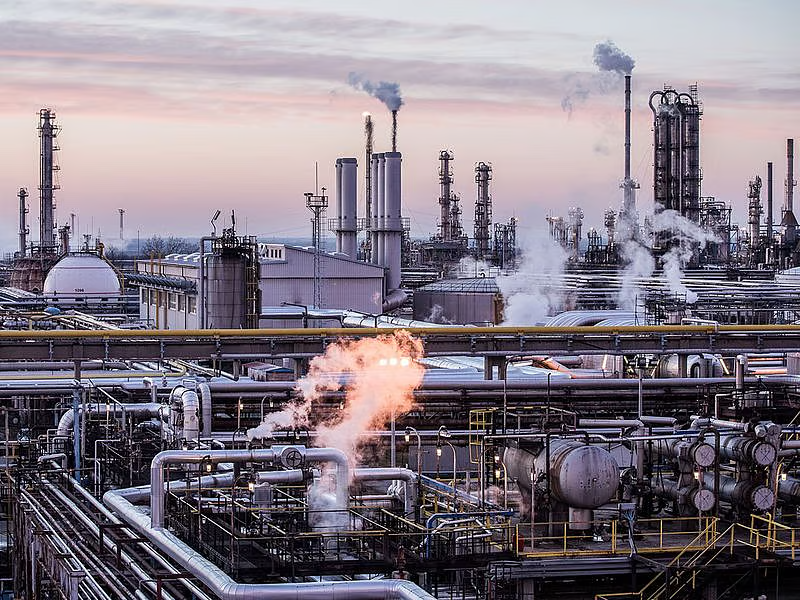
Regional factors relate to what’s happening in the GCC and nearby countries. These factors shape investor confidence and how much money flows into Dubai, which can push prices up, slow them down, or keep them steady.
Role of Oil Prices in Dubai’s Property Market
Oil prices influence Dubai’s real estate market because they shape regional liquidity and investor confidence. Rather than acting in isolation, oil price movement affects how capital enters or pauses across Gulf markets, which then feeds into property activity in Dubai.
In 2026, oil prices will matter less as a direct trigger and more as a signal of regional financial strength. Even during periods of softer energy pricing, Dubai benefits from broader income sources and diversified capital flows, which help reduce sharp property market swings compared to oil-dependent economies.
Regional Economic Alignment Within the GCC
Economic alignment across GCC countries affects how capital moves within the region. Strong fiscal positions in Saudi Arabia, Qatar, and Abu Dhabi increase regional liquidity and investment confidence.
Why GCC alignment supports Dubai prices:
- Cross-border capital mobility
- Preference for mature, liquid markets
- Lower concentration risk for investors
- Dubai as a regional entry point
As regional confidence rises, capital tends to flow toward Dubai due to its depth, transparency, and international accessibility.
Regional Stability
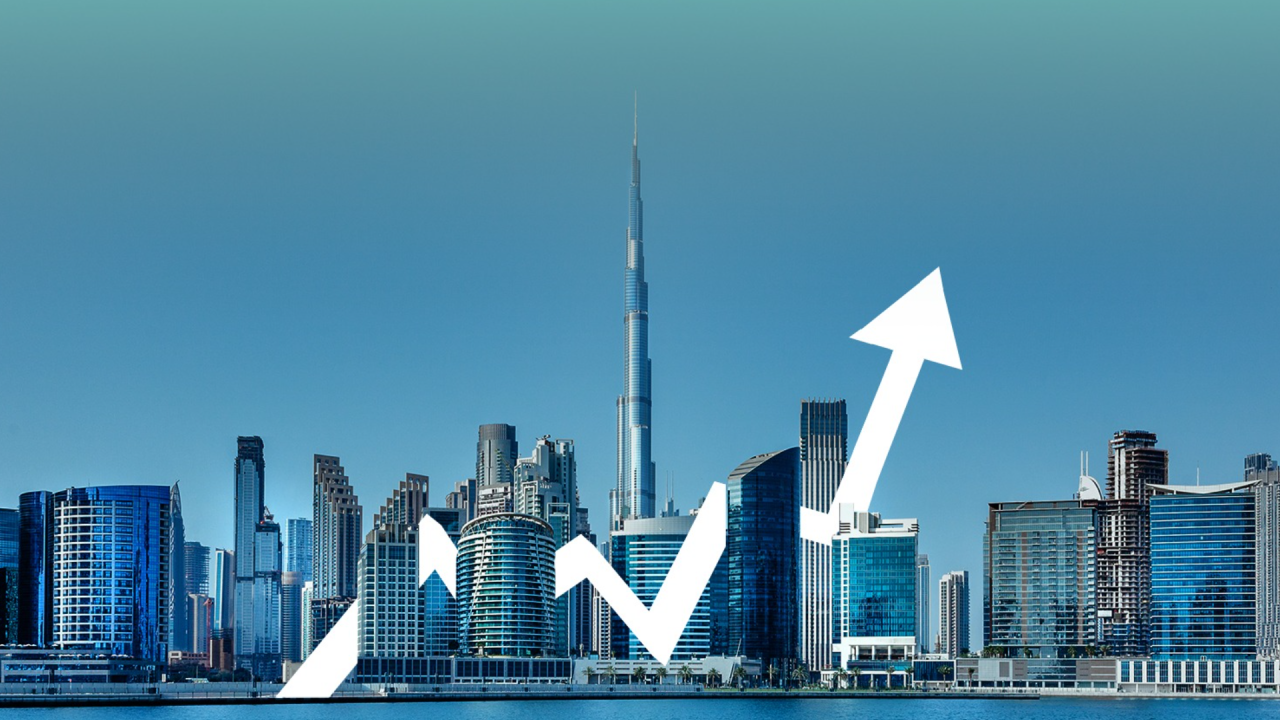
Dubai’s property market benefits from the UAE’s political stability and safety in a region where uncertainty is standard. When nearby countries face ongoing issues such as conflict risk in Syria, political and economic instability in Yemen, and security and governance concerns in Iraq, many investors prefer to move their money to safer places. Dubai stands out because it has more explicit rules, a stronger legal system, and a stable economy, which help protect long-term investments. Its growth as a global business hub also supports demand, especially from buyers looking for security and capital protection.
Key risks to watch in 2026
Investors should keep an eye on a few key risks in 2026 because they can quickly change demand, confidence, and financing conditions in Dubai:
- Currency moves
- Global interest-rate changes
- Tighter bank lending
- Oil-led GCC cash flow shifts
- Trade-route disruptions
- Regional stability
The Global Investor’s Outlook
As 2026 approaches, global and regional investors want markets with steady growth and lower risk. Dubai remains attractive because it attracts international buyers and foreign investment. It is also supported by GCC money flows, ongoing infrastructure development, and strong business confidence. Many buyers simply want to know which signs show that demand is likely to increase.
Ongoing infrastructure investment and diversification toward technology and sustainability strengthen investor confidence. These factors support steady demand and reinforce Dubai’s position as a preferred global real estate market.
Conclusion
By 2026, Dubai property prices will be driven by clear, measurable forces rather than speculation. Global interest rates, currency strength, oil income, and regional safety will shape buyer confidence and price direction. Investors who understand how these forces connect can enter the market with better timing, select locations with stronger demand support, and reduce risk exposure. The market will reward informed decisions, not rushed ones. Dubai will not suit every buyer in the same way, but it suits buyers who act with insight. Knowing which signals matter, where price pressure may build, and how global changes affect local values can protect capital and improve outcomes. Preparation will matter more than prediction in 2026.
2026 will reward preparation, not guesswork. Contact us to discuss Dubai property options shaped by fundamental market drivers.
Frequently Asked Questions
What factors influence property prices in Dubai?
+−
Dubai property prices depend on currency strength, oil revenue, regional political stability, global interest rates, and international investor activity.
How does political stability affect Dubai property investment?
+−
Political stability supports investor confidence by reducing risk and protecting capital, which encourages foreign property investment in Dubai.
Why do oil prices affect Dubai property prices?
+−
Oil prices affect regional income and liquidity, thereby increasing or reducing the capital available for property investment across the UAE.
How do regional conflicts impact Dubai property demand?
+−
Regional conflicts push investors toward stable markets, which often increases demand for Dubai property as a safer regional option.
Why do foreign investors choose Dubai real estate?
+−
Foreign investors choose Dubai due to legal clarity, tax advantages, capital mobility, and regional stability.
How do currency changes affect Dubai property prices?
+−
Currency fluctuations affect affordability for international buyers, potentially increasing or decreasing transaction volume and short-term demand.
How do global interest rates influence Dubai property prices?
+−
Global shifts in interest rates affect capital flows, which can redirect investment toward Dubai when borrowing costs rise elsewhere.
Is Dubai property linked to global economic conditions?
+−
Dubai property prices respond to global economic conditions because demand relies heavily on international buyers and cross-border capital.
How does global uncertainty affect Dubai property prices?
+−
Global uncertainty delays purchase timing rather than eliminating demand, which can slow transactions until market direction becomes clearer.
What role does international capital play in Dubai real estate?
+−
International capital supports price stability in Dubai by providing demand beyond local income and domestic purchasing power.